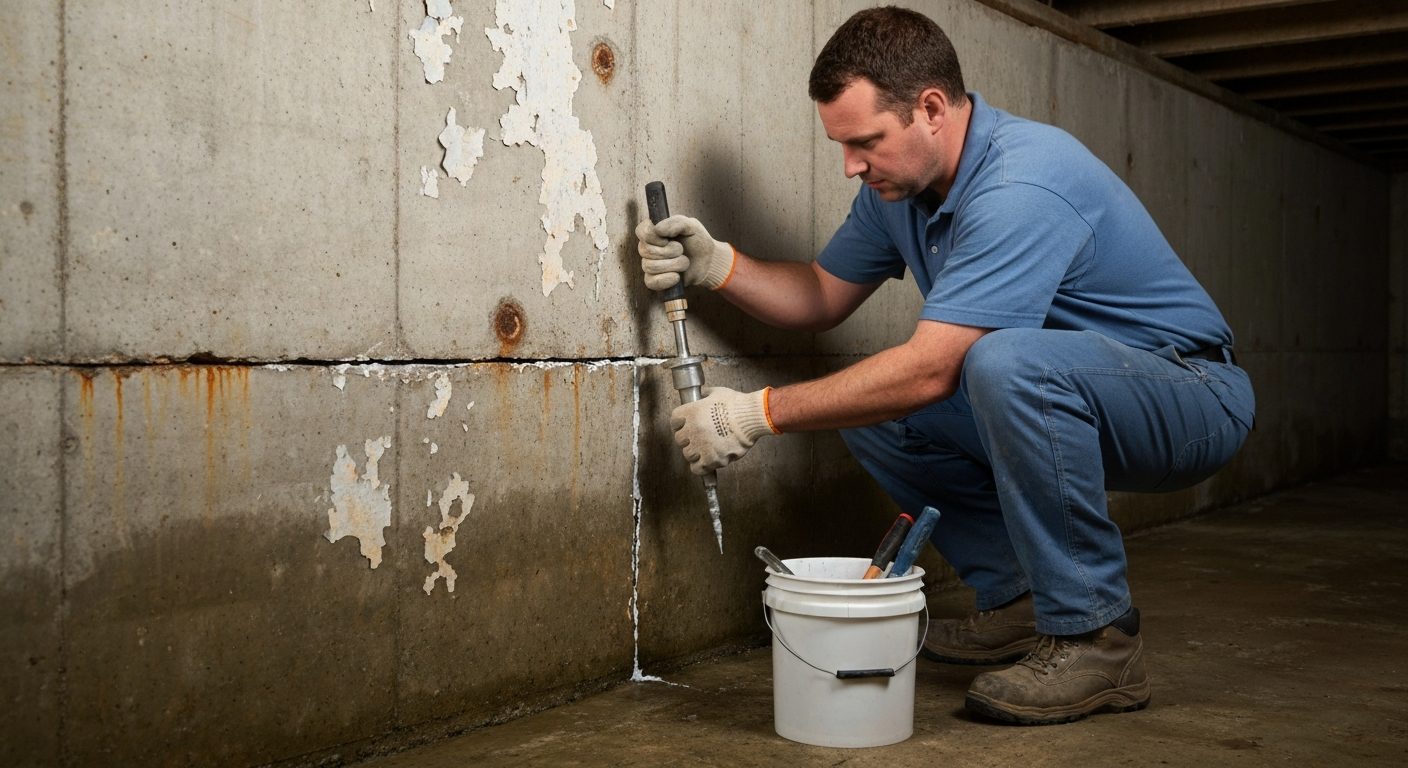
Basement waterproofing options and costs in Rio Terrace
In Rio Terrace, Alberta, homeowners usually start waterproofing discussions after they notice damp corners, musty odours, or repeating efflorescence—often during spring melt or heavy rains. With a population of 1,305 (Statistics Canada, 2021 Census), Rio Terrace is smaller than the Calgary core, so contractors may prioritize nearby Calgary-area jobs first and then schedule Rio Terrace work when access crews are available. That timing can affect quote turnaround and, in peak spring months, labour pricing.
Most homes in the Calgary area sit on clay and clay-till soils, and those materials hold water and expand when saturated, increasing lateral pressure on foundation walls and footings. Add the freeze–thaw cycle typical of southern Alberta and you get widening cracks at joints—exactly where older tar-and-paper practices and corroded weeping tile fail first. In practice, the cost for waterproofing doesn’t just depend on the basement problem; it depends on whether water entry is being prevented outside or managed after it arrives inside. Because of the clay-heavy subgrade, exterior projects tend to require deeper excavation, careful disposal of heavy spoils, and more labour-heavy access planning.
Exterior waterproofing is in highest demand around older pockets near the Bow and Elbow river valley low spots and coulees, where hydrostatic pressure can be more pronounced. Interior solutions are often chosen when patios, decks, or tight lot lines make full excavation impractical. Use the table below to compare common approaches, then we’ll break down what drives pricing differences for your Rio Terrace scope.
| Method |
What It Addresses |
Disruption Level |
Durability |
Price Range |
| Exterior excavation + new membrane + drainage tile |
Stops water entry by replacing failed exterior systems; re-establishes a functioning perimeter drain and directs water away from the foundation |
High (landscaping, concrete removal, excavation) |
Long-term when installed to grade and tied into functioning discharge |
$9,000–$25,000 |
| Interior perimeter drain channel + sump pit |
Captures water that enters through cracks/joints and reduces hydrostatic build-up with active pumping |
Medium (interior floor work and limited wall exposure) |
Very good for clay conditions when drainage and discharge are reliable |
$5,000–$15,000 |
| Foundation crack injection (epoxy or polyurethane) |
Seals cracks to slow moisture migration; polyurethane targets active seepage, while epoxy is typically used for non-moving, structural-grade cracking |
Low to medium (surface prep and localized drilling) |
Good when crack movement is ruled out and hydrostatic pressure is controlled |
$500–$1,800 |
| Sump pump installation (primary + battery backup) |
Prevents interior flooding by pumping collected water; backup reduces risk during spring power disruptions |
Low to medium (pit + discharge routing) |
High reliability when maintained and backup is included |
$900–$3,000 |
| Window well drain installation |
Stops localized water entry at egress/window wells and reduces wet sills and mould-prone corners |
Low to medium |
Good as part of a broader plan when discharge is properly directed |
$900–$3,000 |
| Lot re-grading / downspout extension |
Reduces surface water loading near the foundation; improves runoff behaviour away from walls |
Low to medium (yard work) |
Moderate (depends on ongoing maintenance and correct grades) |
$1,500–$6,000 |
Prices are estimates only and vary by project scope, site access and material selection.
What affects the price of waterproofing in Rio Terrace
In Rio Terrace, Alberta, you can see the same waterproofing concept quoted 30–50% differently across Calgary and surrounding communities because the “same problem” is often coming from different water pathways and different site constraints. Contractors measure success differently too: one may propose a symptom-control interior system, while another may address the source with an exterior membrane and drainage rebuild. Both can be correct—until you compare the site-specific details like soil conditions, discharge routing, excavation access, and whether the existing drainage tile is actually functioning.
The three biggest drivers that separate regional costs from the national average are soil type, water table conditions, and freeze–thaw. Clay-heavy soils common across the Prairies expand during freeze–thaw and exert lateral pressure on walls, worsening cracks over time. In low-lying coulees and river-valley pockets around the Calgary region, high seasonal groundwater and storm events increase hydrostatic pressure, which raises sump run times and often requires more robust drainage and a reliable discharge. Freeze–thaw also widens existing joints, so a crack repair that would last years in a milder climate may need companion drainage improvements here.
Concrete examples from Rio Terrace-area basements: if your foundation is poured concrete and the cracks are hairline (not horizontal or active-moving), crack injection may fit within the $500–$1,800 band—especially when combined with downspout extensions. If you have a block foundation with recurring seepage and a failed perimeter drain, interior perimeter drainage and sump design typically falls in the $5,000–$15,000 range, because floor cutting, channel installation, and discharge management are labour-intensive. If excavation is needed along a tight lot line with deck or patio removal, exterior work commonly trends toward the upper end of $9,000–$25,000.
| Price Factor |
Why It Matters |
Cost Impact |
| Interior vs. exterior approach — interior is less disruptive but addresses symptoms |
Interior systems manage water after it enters; exterior systems replace failing layers that create the entry path |
Interior often costs 30–60% less upfront, but may require ongoing pump reliance |
| Foundation type — poured concrete vs. block vs. stone vs. ICF |
Different materials behave differently with cracking and sealing; some need crack injection plus drainage to perform |
Poured concrete may allow targeted sealing; block often needs fuller interior drainage strategies |
| Soil type — clay expands more than sand, adding pressure |
Clay saturation increases lateral pressure and forces more consistent water management |
Higher material and labour for drainage details; exterior excavation can cost more |
| Crack type and length — hairline vs. structural horizontal cracks |
Structural movement changes the solution and may require engineered review |
Horizontal/structural cracking can add assessment and potentially underpinning discussions |
| Sump pump backup system — battery or water-powered backup needed |
Backup reduces flood risk during spring conditions and power interruptions |
Typically adds to the sump portion; improves total system reliability |
| Access — landscaping, decks, or driveways must be removed for exterior |
More removal and reinstatement increases labour and disposal costs |
Can push exterior work toward the upper end of the local band |
| Weeping tile age — original tile (60+ years) may be completely failed |
Older tile may be clogged, collapsed, or disconnected |
Often triggers replacement and increases excavation scope |
| Mould or efflorescence remediation required before sealing |
Moisture-contaminated surfaces need proper cleaning and drying for coatings and sealants to bond |
Adds time, containment steps, and surface prep materials |
Permits & regulations in Alberta
In Alberta, some basement waterproofing work stays in the realm of “trade repairs,” while other items typically require a building permit—especially when you’re altering drainage to the point that it changes site behaviour or foundation performance. In general, foundation excavation and changes that affect how surface and sub-surface water is managed near the foundation often fall under permit requirements. Structural crack repair is another area where permits and engineering reviews may come into play, particularly with major step cracks in block walls or horizontal cracking that suggests possible movement.
As a practical homeowner rule in Rio Terrace: commonly permitted work includes foundation excavation that exposes and alters foundation elements, structural crack repairs involving significant re-stabilization, and changes to lot drainage that meaningfully affect how water is routed. Often not requiring a permit are interior floor drying, localized crack sealing where no structural alteration is being made, and sump pump installations where only equipment is added and municipal discharge rules are followed (but always confirm the connection requirements).
For sump systems: if you’re connecting discharge to storm or sanitary services, municipal approval is typically required. For anything that looks structural, plan on a structural engineer’s assessment. Before signing a contract, verify the contractor carries (1) a valid Alberta licence for the trades they perform, (2) liability insurance, and (3) WSIB/WCB coverage—then request clearance letters or equivalent proof. Check the online registry for the licence details, review the certificate of insurance for limits and named insured wording, and confirm WSIB/WCB status through the clearance letter process. Get this in writing before work starts.
Interior vs exterior waterproofing — what does Rio Terrace need?
The fundamental difference is source control versus water management. Exterior waterproofing involves full excavation, replacement of failed membrane layers, installation of a new perimeter drainage tile, and backfilling—so it addresses where water is entering in the first place. It costs more and is more disruptive because your landscaping, and sometimes patios or walkways, must be removed and reinstated. Interior waterproofing—like a perimeter drain channel, sump pit, and sump pump—captures water after it enters. It’s generally less invasive, but it does not stop hydrostatic pressure from acting on the foundation wall itself.
In Rio Terrace’s Calgary-area clay and freeze–thaw conditions, the best choice depends on your foundation type and failure pattern. Poured concrete walls often respond well to crack injection when cracks are stable and the exterior drainage and downspouts have been corrected, because the wall can be sealed effectively once water entry points are reduced. Block foundations frequently need interior drainage as a practical complement because block joints and older interior drainage layouts can allow persistent seepage even when surface sealing is attempted. If you’re dealing with recurring spring dampness, you also need to plan for Alberta power fluctuations: a battery backup (or water-powered backup where appropriate) helps prevent interior flooding during outages that can occur around stormy spring periods.
A real-world pricing justification: if exterior excavation access is impossible and you have localized seepage, an interior perimeter drain plus sump may land in the $5,000–$15,000 range. If, however, you have repeated efflorescence and you can excavate along the affected wall, exterior waterproofing commonly trends toward $9,000–$25,000, and that extra cost is often warranted because it reduces the ongoing hydrostatic load that drives crack re-opening.
| Method |
Best For |
Addresses Source? |
Disruption |
Lifespan |
Price Band |
| Full exterior excavation + membrane |
Widespread seepage, failed exterior drainage, persistent efflorescence, or hydrostatic pressure concerns |
Yes—targets the exterior water entry path |
High (excavation, removal, reinstatement) |
Long-term with proper grade, drainage, and discharge |
$9,000–$25,000 |
| Interior French drain + sump system |
Clay-heavy basements where water is getting in and you need reliable capture and pumping |
No—manages water after entry |
Medium (floor cutting and interior works) |
Very good when discharged correctly and maintained |
$5,000–$15,000 |
| Crack injection — epoxy (structural) |
Non-moving, stable cracks in poured concrete where pressure is controlled by other measures |
Partial—seals a pathway in the wall |
Low to medium (surface prep and drilling) |
Good when cracks are stable and drainage prevents reactivation |
$500–$1,800 |
| Crack injection — polyurethane (active leak) |
Cracks with active seepage where water flow needs a flexible seal |
Partial—targets active flow paths |
Low to medium |
Good when paired with drainage control and crack movement is addressed |
$500–$1,800 |
| Interior drain channel only (no sump) |
Very small seepage volumes where gravity discharge is feasible |
No—still manages water after entry |
Low to medium |
Moderate; depends on discharge conditions |
$3,000–$8,000 |
| Re-grading + downspout extensions |
Surface water loading issues and early dampness without major wall seepage |
Indirect—reduces water near the foundation |
Low to medium (yard work) |
Moderate; needs maintained drainage |
$1,500–$6,000 |
How to choose a waterproofing contractor in Rio Terrace
Start by verifying the contractor’s Alberta credentials and coverage, because waterproofing failures are often coverage-and-communication failures as much as they are installation issues. In practice, that means confirming the contractor’s licence for the scope they’re doing, requesting proof of liability insurance (certificate of insurance) with correct project details, and verifying WSIB/WCB coverage with a clearance letter or equivalent documentation. In Alberta, these checks are worth doing early—before you sign—because a cancelled or underinsured project is costly when excavation or interior floor work is already in progress.
Next, ask for 2–3 itemised written quotes rather than a lump sum. You want a breakdown of labour versus materials, including membrane/drain components, pipe and discharge details, disposal/excavation inclusions, and any interior floor cutting allowances. Make sure the scope clarifies what’s excluded: is disposal included for heavy clay spoils, will they reinstate landscaping to a defined standard, and is permit pulling included (if required for your specific work)? Also ask about warranty structure. A workmanship warranty should be clearly stated (length and what it covers). Product/manufacturer warranties should be provided separately, and you should confirm whether they’re transferable to future owners if you sell.
Payment matters in Alberta projects with excavation risk: never pay more than 10–15% upfront, and hold back a meaningful portion until the job is complete and materials are installed as specified. Finally, get a start date and completion estimate in writing, and ensure the crew plan accounts for weather delays—important in spring melt when clay soils can turn excavation work into mud very quickly.
- Confirm Alberta licence details match the work described (not just a general business registration).
- Verify liability insurance and request a current certificate of insurance with limits listed.
- Provide WSIB/WCB clearance letter or proof of coverage for workers involved.
- Request a detailed scope: excavation depth, membrane type, drainage tile size, and discharge method.
- Ensure interior quotes specify channel location, sump pit size, and routing of discharge.
- Ask whether permit pull is included where required and who obtains it.
- Confirm disposal is included for clay spoils and whether heavy debris handling is part of the price.
- Look for written warranty terms: workmanship length, exclusions, and response timeline.
- Ask whether the warranty is transferable and whether it requires maintenance records.
- Check payment schedule: 10–15% maximum upfront, with holdback until completion.
- Get start date and completion estimate in writing, including weather contingencies.
- Require photos/reporting steps (pre-demo, after membrane/drain install, final grading and discharge check).
Red flags in Rio Terrace include: vague “we’ll waterproof it” scopes with no drainage discharge plan, quotes that omit disposal or reinstatement details, contractors who won’t discuss permit requirements or engineering when cracking is structural, no written warranty terms, and contractors asking for large upfront payments (well beyond 10–15%).
Frequently asked questions — waterproofing in Rio Terrace
How does Rio Terrace's soil affect my foundation?
Rio Terrace sits in Calgary’s broader clay and clay-till soil conditions, which tend to hold moisture and expand when saturated. During southern Alberta freeze–thaw, that expansion increases lateral pressure on foundation walls and can worsen existing cracks and mortar joints, especially at corners and where the wall meets slab edges. That pressure is why a “seal-only” approach can underperform if the exterior drainage or downspout discharge isn’t corrected. In practical terms, homes with recurring spring dampness often need either an upgraded exterior perimeter drain with membrane (typically within $9,000–$25,000 when excavation is feasible) or a dependable interior drain/sump system (often $5,000–$15,000) to manage the water the soil keeps feeding into the foundation.
Do I need a permit for foundation work in Alberta?
In Alberta, many foundation-adjacent jobs require a permit, particularly when you excavate near the foundation, change drainage patterns, or do structural-oriented crack repair. In Rio Terrace, homeowners commonly need to plan for permit involvement when work goes beyond cosmetic sealing—especially if excavation exposes foundation elements or if you’re changing how water is routed away from the building. Sump discharge connections can also trigger municipal approval requirements if you’re tying into storm or sanitary systems. For structural crack situations (for example, major horizontal cracks in block walls), an engineer’s assessment is often needed to determine whether underpinning or other structural measures are required. The safest approach: ask the contractor what triggers a permit for your specific scope and confirm in writing who is responsible for permit pulling and inspections, if applicable.
How long does waterproofing last?
With proper installation in Rio Terrace’s clay and freeze–thaw conditions, waterproofing can last many years, but longevity depends on matching the method to the water source. Exterior membrane plus functioning perimeter drainage is the most durable because it controls where water enters; when installed with correct slope, discharge, and backfill practices, it typically provides the best long-term performance. Interior systems are also reliable—especially when paired with proper sump pumping and sometimes backup power—but they manage water after it gets through, so maintenance matters (pump operation checks, cleared discharge lines). Crack injection can last a long time for stable, non-moving cracks, and many projects fall into the $500–$1,800 band when crack conditions are right. If drainage remains poor, freeze–thaw can reopen pathways, so the best “lifespan” comes from combining sealing with drainage upgrades rather than relying on one step alone.
Can I waterproof my basement from the inside only?
You can often improve a basement from the inside only in Alberta, and Rio Terrace homeowners frequently do when access is limited by decks, patios, or tight lot lines. Interior approaches like a perimeter drain channel and sump pit can significantly reduce seepage and floor-level dampness by capturing water where it collects. However, interior work generally does not eliminate hydrostatic pressure acting on the foundation wall itself, so it’s most effective when water entry is limited or when you pair the interior plan with “outside basics” like proper downspout extensions and grading. If you have widespread efflorescence or evidence the original weeping tile system has failed, interior-only solutions may not be sufficient long-term—especially in clay soils that keep supplying moisture during spring melt. Many such projects are planned either as full interior drainage with pumping (often $5,000–$15,000) or upgraded exterior work when excavation is possible (often $9,000–$25,000).
What causes foundation cracks in Rio Terrace?
Foundation cracks in Rio Terrace typically come from a combination of freeze–thaw movement, clay moisture expansion, and aging drainage systems. Clay-heavy soils expand when saturated and can increase lateral stress against walls and footings, which is why cracking often shows up or worsens after spring melt. Freeze–thaw then widens existing joints and can drive water into micro-pathways, leading to persistent dampness and efflorescence. Another common trigger in older Calgary-area neighbourhoods is clogged or failing weeping tile and undersized interior drainage, which allows water to build up behind and under foundation assemblies. Crack type matters: hairline cracks are often sealable, while horizontal cracks or major step cracks may indicate structural movement and require engineering review. That difference affects both approach and cost; targeted injection projects may fall into the $500–$1,800 range when appropriate, but more complex cases can require drainage system redesign or additional structural evaluation.
How do I compare waterproofing quotes?
To compare waterproofing quotes in Rio Terrace, insist on scope clarity and apples-to-apples details. Ask each contractor for an itemised breakdown (labour and materials), and confirm whether permit pulling is included where required. Clarify what’s included for excavation, disposal of heavy clay spoils, and reinstatement of landscaping or concrete. For interior work, confirm the sump pit size, pump selection, and discharge route; for exterior work, confirm membrane coverage, drainage tile layout, and how the system ties into a functional discharge. Also compare warranty language—workmanship warranty term and product warranty type—plus whether warranties are transferable. Finally, check payment schedules: never accept large upfront payments, and hold back until the final inspection and testing steps are complete. If one quote is much lower (or higher) than others, it usually means a missing step like backup pumping, proper discharge routing, or necessary remediation before sealing.