Basement waterproofing options and costs in Skyrattler
Skyrattler homeowners typically face waterproofing decisions that start with one uncomfortable truth: in a small community where housing turnover is steady and many basements pre-date modern waterproofing details, the original system may have aged out. According to Statistics Canada, Skyrattler had a population of 1,947 in 2021 (Statistics Canada, 2021 Census), and in nearby Calgary’s older neighbourhoods, failing tar-and-paper era approaches and corroded drainage can show up as damp walls, floor seepage, or recurring spring leaks. While your exact basement age matters more than the town size, the Calgary region’s clay-heavy soils and freeze–thaw cycles mean small cracks and clogged weeping tile joints can worsen quickly—turning minor seepage into noticeable hydrostatic pressure.
Cost in Skyrattler is shaped by excavation reality: clay can hold water and swell when saturated, making excavation slower and increasing disposal volume. When access is tight—concrete patios, narrow side yards, or mature landscaping—crews price the extra labour to protect finished surfaces and handle spoil removal. Contractor availability also affects turnarounds; exterior work is more labour-intensive than interior options, so interior perimeter drainage is often scheduled sooner when budgets are tight.
In the Skyrattler area, trades are especially in demand around Calgary’s older basin-adjacent communities (where clay soils and spring runoff are common), and that demand tends to ripple into pricing for full-perimeter work. Below are the most common waterproofing methods homeowners compare, with realistic price ranges to help you start budgeting.
| Method |
What It Addresses |
Disruption Level |
Durability |
Price Range |
| Exterior excavation + new membrane + drainage tile |
Source of water entry by rebuilding the outside waterproofing system |
High (excavation, landscaping restoration, spoil disposal) |
Long-term (typically 20+ years with correct drainage) |
$9,500 – $23,500 |
| Interior perimeter drain channel + sump pit |
Manages water after it enters; reduces hydrostatic pressure at the slab/wall line |
Medium (interior floor work; minimal exterior disruption) |
Good to long-term (15+ years with pump maintenance) |
$6,000 – $13,500 |
| Foundation crack injection (epoxy or polyurethane) |
Seals cracks; polyurethane helps with active seepage, epoxy suits dry cracks |
Low to medium (small drilling/patching) |
Moderate to long-term (depends on crack movement and water pressure) |
$600 – $1,800 |
| Sump pump installation (primary + battery backup) |
Prevents water backup during heavy inflow or power interruptions |
Low to medium (pit + discharge line; interior electrical work) |
High reliability with backup; 10+ year pump life planning |
$1,200 – $3,000 |
| Window well drain installation |
Stops side-entry water around egress/window wells |
Medium (excavation at specific areas) |
Good (typically 10–20 years if kept clear) |
$1,200 – $2,800 |
| Lot re-grading / downspout extension |
Reduces roof runoff and directs water away from foundation perimeter |
Low (yard work only) |
Moderate (performance depends on maintaining slope) |
$1,000 – $4,500 |
Prices are estimates only and vary by project scope, site access and material selection.
What affects the price of waterproofing in Skyrattler
In Skyrattler and across the Calgary region, two homeowners can receive quotes for the “same” leak and still see 30–50% differences—mostly because waterproofing isn’t one product, it’s a complete system matched to site conditions. Even when the problem looks identical (a damp corner, efflorescence, or a seeping crack), the contractor’s findings on soil saturation, drainage capacity and crack behaviour change the scope. That’s why exterior work commonly lands near the top of the band (for example, exterior waterproofing excavation priced around $9,000 – $25,000 for the city tier), while interior drainage may stay closer to $5,000 – $15,000 when the goal is symptom control rather than rebuilding the outside barrier.
Three local drivers separate Calgary-area pricing from the national average: soil type, water table conditions, and freeze–thaw. Clay-heavy soils common in southern Alberta expand when saturated, increasing lateral pressure on foundation walls and widening existing joints during thaw cycles. High seasonal groundwater (especially in pockets along river valleys and low-lying coulees) increases sump run times and may require higher-capacity pumps and better discharge management. Finally, freeze–thaw makes small defects persistent—mortar joints and sealants harden and fail, so contractors price in the extra prep and crack evaluation you’ll need.
Concrete examples that raise or lower cost in Skyrattler: (1) a home with an unknown weeping tile condition—especially if original tile is decades old—often needs more extensive interior drainage or even exterior rebuilding; (2) a basement with multiple leak points and long crack runs increases labour for prep and staged sealing; (3) easier access with front/back yard clearance can reduce excavation time and disposal fees, pulling exterior costs closer to the low end of the exterior range.
| Price Factor |
Why It Matters |
Cost Impact |
| Interior vs. exterior approach — interior is less disruptive but addresses symptoms |
Interior drainage controls water after entry; exterior targets the source |
Interior can cost ~30–60% less than full exterior in similar basements |
| Foundation type — poured concrete vs. block vs. stone vs. ICF |
Crack sealing and drainage needs differ by wall construction and jointing |
Poured walls often respond well to crack injection; block typically needs drainage attention |
| Soil type — clay expands more than sand, adding pressure |
Clay saturation increases lateral load during freeze–thaw |
May require stronger drainage design and more complete sealing prep |
| Crack type and length — hairline vs. structural horizontal cracks |
Structural movement changes what “works” and may trigger engineering support |
Horizontal/step cracks can push costs toward higher bands due to assessment and labour |
| Sump pump backup system — battery or water-powered backup needed |
Prevents water accumulation during spring power disruptions |
Backup typically adds several hundred to ~$2,000 depending on system and controls |
| Access — landscaping, decks, or driveways must be removed for exterior |
Extra removal and restoration time directly adds labour and materials |
Tight lots can increase excavation restoration by thousands |
| Weeping tile age — original tile (60+ years) may be completely failed |
Failed tile means water redirects into walls/slab gaps |
Can increase scope from targeted repairs to full drainage replacement |
| Mould or efflorescence remediation required before sealing |
Moisture contamination must be addressed or new sealants won’t bond reliably |
Usually adds labour and product/containment costs before waterproofing |
Permits & regulations in Alberta
In Alberta, homeowners should expect that foundation excavation, structural crack repair, and changes to lot drainage are commonly tied to permitting requirements. As a rule of thumb, if the work affects structural integrity (for example, major crack repairs) or changes how water is directed around your property (like perimeter drains and discharge connections), a permit is often required. Sump pump installations can also trigger municipal approval when discharge is routed to a storm or sanitary sewer system, especially if the discharge point or connections are altered.
For structural crack repair—particularly horizontal cracks in block walls, step cracking, or any sign of movement—an engineer’s assessment is often needed to confirm whether underpinning or other structural remedial work is necessary. Don’t accept “we’ll inject it and see.” In practice, a good contractor in the Calgary/Skyrattler market will coordinate engineering support when warranted and clearly separate structural vs. non-structural waterproofing items in the quote.
Step-by-step verification you can do as a homeowner in Skyrattler:
- Ask for the contractor’s Alberta business details and confirm they match the name on their quote.
- Request proof of liability insurance and the certificate of insurance (COI) for your project address.
- Request WSIB/WCB clearance letters or coverage documentation; ensure it’s current.
- For structural work, ask whether engineering is included or subcontracted—and request the engineer’s scope if applicable.
- Confirm whether permits will be pulled by the contractor, and get that commitment in writing before work starts.
- If they connect discharge lines to municipal infrastructure, ask what approvals are required and who applies.
Interior vs exterior waterproofing — what does Skyrattler need?
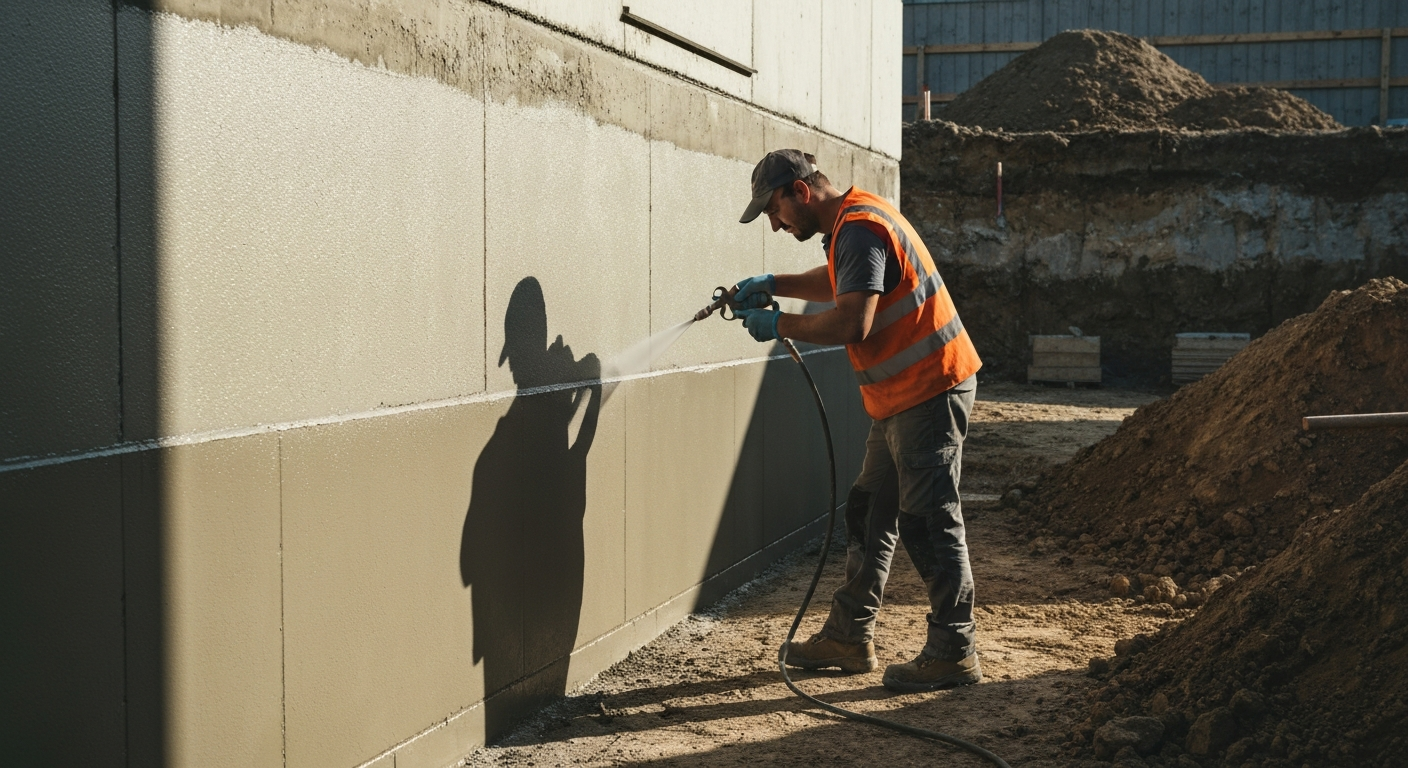
The fundamental difference is that exterior waterproofing rebuilds the barrier outside your foundation, while interior waterproofing manages water after it enters. Exterior excavation involves removing soil around the foundation, applying a continuous waterproof membrane, installing proper exterior drainage tile, and then backfilling—so it addresses the source of water entry. The trade-off is disruption: excavation in clay soils increases labour and spoil disposal, and landscaping restoration often becomes part of the job.
Interior waterproofing typically uses a perimeter drain channel, sump pit, and sump pump to intercept water at the interior edge of the basement slab/wall line. This approach is less invasive and often priced around $5,000 – $15,000 in Skyrattler-area basements, especially when the wall surface is accessible and the goal is to stop seepage that repeats during spring melt. However, interior systems don’t stop hydrostatic pressure from building against the foundation wall—they reduce the consequences by safely draining inward. In clay-heavy conditions with freeze–thaw stress, that distinction matters.
In our Calgary-area basements, poured concrete walls generally respond better to crack injection when the cracks are stable and water pathways are limited. Block foundations often need interior drainage as a practical complement because mortar joints and block interfaces can weep under sustained saturation. If you’re choosing a sump approach, plan for a reliable backup system (battery backup and/or a water-powered option) because power interruptions and pump cycling can happen during spring events and maintenance periods. If your leak is severe or you’re seeing recurring efflorescence across multiple wall segments, that’s when the exterior route—often within $9,000 – $25,000 for excavation-based work—can be justified because it removes the root cause instead of chasing symptoms.
| Method |
Best For |
Addresses Source? |
Disruption |
Lifespan |
Price Band |
| Full exterior excavation + membrane |
Recurring seepage, high hydrostatic pressure pockets, failed exterior drainage |
Yes |
High |
20+ years with proper drainage |
$10,000 – $25,000 |
| Interior French drain + sump system |
Interior water management where exterior access is limited or budget is tighter |
No (controls after entry) |
Medium |
15+ years with maintenance |
$6,000 – $14,500 |
| Crack injection — epoxy (structural) |
Cracks that are stable and not actively flowing under pressure |
Partial (seals pathways, if dry/stable) |
Low |
10–20 years depending on crack behaviour |
$600 – $1,600 |
| Crack injection — polyurethane (active leak) |
Active seepage or damp cracks where water is finding a path now |
Partial (seals active pathways) |
Low to medium |
Variable; often needs drainage support in clay pressure conditions |
$800 – $2,000 |
| Interior drain channel only (no sump) |
Limited dampness where inflow is low and routing to a safe discharge is simple |
No |
Medium |
5–12 years (depends on inflow and backup plan) |
$5,000 – $9,500 |
| Re-grading + downspout extensions |
Roof runoff-driven dampness, minor foundation wetting, seasonal surface water |
Yes for surface water pathways |
Low |
Maintenance-dependent (often 3–7 years before rework) |
$1,000 – $4,500 |
How to choose a waterproofing contractor in Skyrattler
Choosing the right contractor in Skyrattler comes down to proof and paperwork as much as it does pricing. First, verify Alberta licensing/business registration (ask for their Alberta business number and the exact legal entity matching the quote). For insurance, request a certificate of liability insurance showing coverage amounts appropriate for excavation and interior floor work; confirm the COI lists the correct insured party. Then check WSIB/WCB coverage: ask for a current clearance letter or documentation that proves they’re registered and in good standing. If they can’t provide these quickly, treat it as a red flag—water jobs are labour-heavy and involve risk.
Second, insist on 2–3 itemised written quotes (not lump sums). The best quotes break out labour and materials separately (membrane/product, drainage tile, sump pit components, pump, discharge piping, excavation, disposal, and restoration). Read what’s excluded: permit pull included or not, disposal included or not, restoration scope (topsoil/sod/asphalt/flagstone) and patching limits for interior floors. If mould or efflorescence remediation is needed, verify it’s in scope before sealing.
Warranty matters: ask for workmanship warranty length and confirm whether the manufacturer product warranty is included and how it applies (and whether it’s transferable to you if you sell). For payment, never pay more than 10–15% upfront, and use a holdback until the final walkthrough and documentation are complete. Finally, ask for a written start date and estimated completion timeline.
- Confirm contractor’s legal name on the quote matches their COI and WSIB/WCB paperwork.
- Ask for a recent project photo set showing similar clay/Alberta-style drainage details.
- Request a written scope that lists materials by type (membrane system, tile type, pump model if sump is included).
- Verify whether permits are pulled and who pays the fees.
- Ask how disposal is handled for excavated clay spoils and whether landfill fees are included.
- Check discharge routing details (sump discharge location, hose/piping routing, and freeze protection).
- Confirm whether they do moisture mapping/testing before recommending crack injection.
- Get warranty details in writing, including workmanship start date and what voids coverage.
- Require a payment schedule tied to milestones (mobilization, rough-in, drainage test, final restoration).
- Ask who is responsible for pump backup component supply and testing.
- Confirm the restoration plan (backfill spec, compaction, surface finish) matches what was removed.
- Make sure the quote includes a clean final inspection and documentation handover.
In Skyrattler, common red flags include: quotes that rely on crack injection only without evaluating water pressure and drainage capacity; “no permit required” statements for excavation/drainage changes; refusal to provide COI or WSIB/WCB clearance; vague warranties that don’t specify workmanship coverage; and payment demands over 15% upfront.
Frequently asked questions — waterproofing in Skyrattler
How do I compare waterproofing quotes?
Start by comparing scope, not just the total price. In Alberta (including Skyrattler), ask every contractor to provide an itemised breakdown: what drainage tile is used, whether a membrane system is included for exterior work, and whether excavation/disposal and restoration are part of the quote. Compare disruption and access assumptions—if one company prices around interior drainage only, the job is fundamentally different from exterior waterproofing. For example, exterior excavation typically falls in the $9,000 – $25,000 band, while interior perimeter drain and sump work often sits around $5,000 – $15,000. Also verify warranty terms and whether permits are included for drainage changes.
How long does basement waterproofing take in Skyrattler?
Timelines depend on whether you’re doing exterior excavation or interior drainage. Interior perimeter drain and sump installations are commonly faster because excavation is limited to a perimeter strip or localized areas; many projects can be completed in about 3–7 working days, with additional time for drying and patch/restoration. Exterior waterproofing with full excavation and membrane work is slower due to clay spoil removal, backfill/compaction, and landscaping restoration—often 1–3 weeks depending on access, weather, and how many foundation sides are exposed. In southern Alberta, freeze–thaw can also affect work windows; crews may stage excavation to reduce time the site is open. Your best estimate comes from the contractor’s schedule plus a written completion target.
What is a weeping tile and does my Skyrattler home have one?
Weeping tile is the foundation perimeter drainage system installed around older basements to collect water and relieve hydrostatic pressure—typically a buried, sloped drain tile system that routes water to a discharge point or sump. Many Skyrattler-area homes built in earlier eras used some form of perimeter drainage, but the age varies widely and original tile can fail after decades due to corrosion, disconnections, or clogging from clay fines. Even when a weeping tile exists, it may not function during peak spring saturation, which is why many repairs focus on verifying whether it’s flowing and whether interior signs like damp corners or efflorescence match the drainage capacity. Ask your contractor how they’ll confirm its condition (camera inspection, flow testing, or excavation verification) before replacing or supplementing it.
Can I waterproof my basement in winter in Skyrattler?
Yes, but you need realistic expectations. In Skyrattler and the broader Calgary region, winter conditions can limit exterior excavation because frozen ground makes digging, membrane detailing, and backfill/compaction more difficult and can delay curing. Interior waterproofing—like installing a perimeter drain channel, sump pit, and crack injection—can often proceed in winter because the work is inside and the contractor can control drying/patching conditions. Crack injection is especially common in cold weather when cracks are accessible, though active leaks still need the correct product (often polyurethane for active seepage). If you’re planning exterior work, ask about staged approaches and whether they can protect exposed foundation surfaces and manage drainage until the backfill returns.
What is the difference between waterproofing and damp-proofing?
Damp-proofing generally means a partial or lower-performance barrier intended to reduce minor seepage and moisture penetration. True waterproofing is system-based: it includes a continuous exterior membrane (when exterior work is chosen), functional perimeter drainage, proper slope/discharge management, and sealing of entry pathways that can handle hydrostatic pressure during spring melt. In Alberta’s freeze–thaw and clay soil conditions, damp-proofing-only approaches often underperform because water pressure increases when soils saturate and walls experience repeated expansion/contraction. That’s why homeowners sometimes see recurring efflorescence or “comes back every spring” behaviour unless drainage and source sealing are addressed. If your leak is recurring, treat it as a waterproofing problem, not just a dampness problem, and ask how the proposed system handles pressure—not just visible moisture.
Will basement waterproofing affect my property value in Skyrattler?
Typically, yes—especially when you can document the problem and the remedy. In a Skyrattler-area market where buyers notice past water staining and recurring odours, a proven waterproofing system can improve confidence and reduce the perception of risk. Exterior waterproofing tends to be a stronger selling point because it addresses the source and often includes drainage rebuild details. Interior systems can still add value when they’re well-designed (perimeter drain, sump, discharge routing) and you have serviceability items like pump access and documented maintenance guidance. Quantitatively, value impact varies by buyer and by whether the leak has recurred, but homeowners often feel the difference immediately in usable basement comfort. Use your contractor’s itemised scope and warranty documentation to support the story.