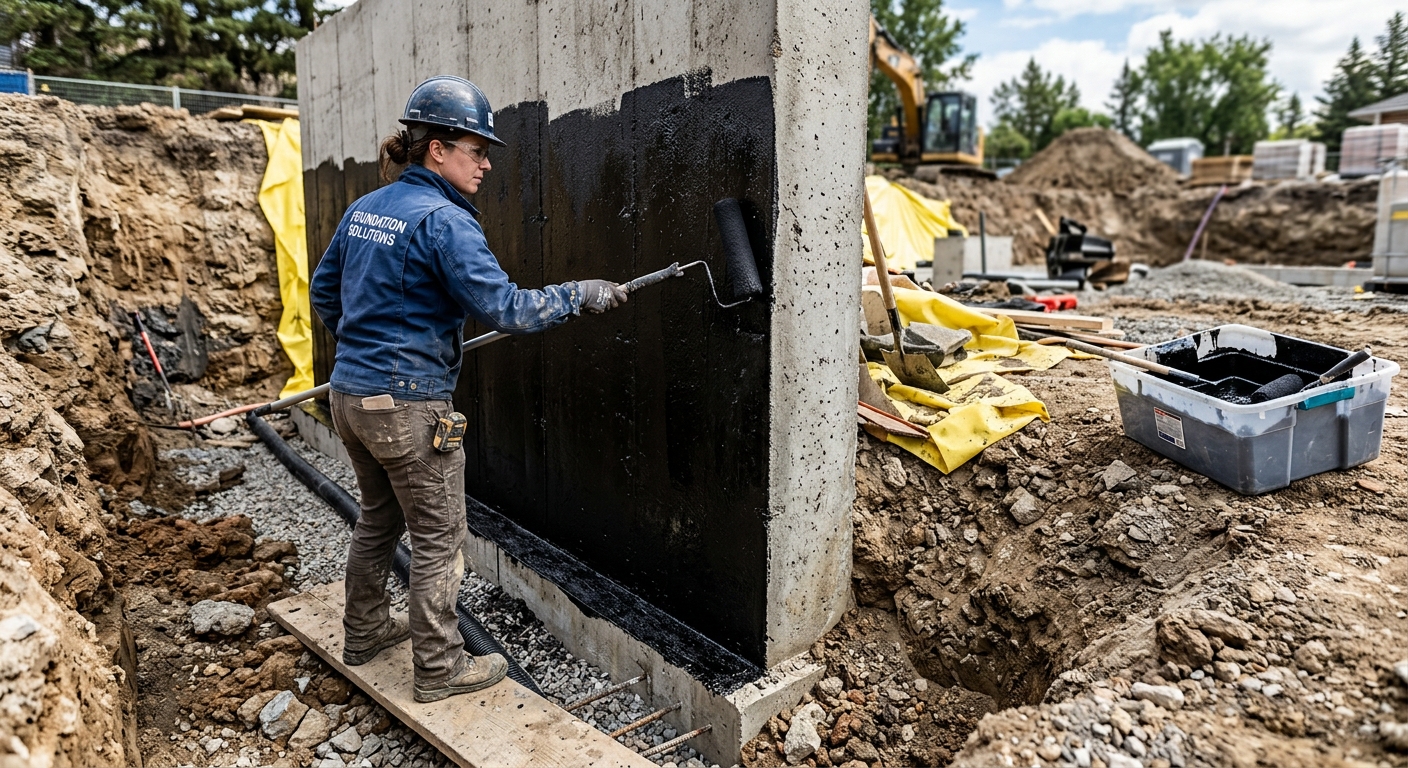
Basement waterproofing options and costs in Britannia Youngstown
Basement waterproofing in Britannia Youngstown, Alberta usually starts with identifying where the water is coming from—soil-side water pushing in at the foundation, or surface water finding its way through cracks, joints, and older drainage systems. With a population of 4,723 (Statistics Canada, 2021 Census), this is a smaller residential pocket within the Calgary economic area, so service availability can be excellent but scheduling can vary once excavation work ramps up in spring. In practice, older homes in Calgary-area neighbourhoods are far more likely to have failing original tar-and-paper-type waterproofing and corroded weeping tile, which then turn minor seepage into recurring wet walls after freeze–thaw cycles.
Calgary-area pricing reflects how clay-and-clay-till soils hold water and expand when saturated, increasing lateral pressure on foundation walls and widening cracks over time. That’s why many quotes land at different levels even for “the same” basement leak: exterior systems must excavate deeper and manage disposal of heavy clay spoils, while interior systems typically rely on a perimeter drain and sump to control collected water. In older pockets of the community where landscaping coverage and tight access are common—especially around mature lots near school and park-side streets—exterior work is frequently in higher demand because yards are often designed with limited drainage paths.
Below is a practical comparison of the most common options contractors use in Britannia Youngstown, and the typical cost bands you’ll see for each approach before we get into what drives pricing up or down.
| Method |
What It Addresses |
Disruption Level |
Durability |
Price Range |
| Exterior excavation + new membrane + drainage tile |
Water entering from the outside soil face; restores a working perimeter drainage path and continuous exterior waterproofing |
High (yard/landscape disruption; excavation around the foundation) |
High (often long-term solution when drainage and membrane are done correctly) |
$9,000–$25,000 |
| Interior perimeter drain channel + sump pit |
Captures seepage and hydrostatic water that enters through cracks/joints, then pumps it away |
Medium (floor work in affected areas; sump pit cut-in) |
High (system relies on pump performance and maintenance) |
$5,000–$15,000 |
| Foundation crack injection (epoxy or polyurethane) |
Stops water movement through targeted cracks; epoxy for stable/structural cracks, polyurethane for active leaks |
Low to Medium (minor drilling; localized patching) |
Medium to High (depends on crack condition and pressure source) |
$500–$1,800 |
| Sump pump installation (primary + battery backup) |
Provides pumping capacity during normal conditions and power outages; reduces recurrence after spring storms |
Low to Medium (pit excavation, discharge line routing) |
Medium to High (best when backup and discharge routing are correct) |
$900–$3,000 |
| Window well drain installation |
Prevents water pooling around basement egress windows and leaking into window openings |
Medium (window well excavation/upgrade) |
Medium to High (depends on grading and discharge path) |
$1,500–$4,500 |
| Lot re-grading / downspout extension |
Redirects roof and surface water away from foundation to reduce crack pressure and soil saturation |
Low (typically small-area earthworks and plumbing adjustments) |
Low to Medium (works best as a complement, not a standalone fix for hydrostatic pressure) |
$900–$3,800 |
Prices are estimates only and vary by project scope, site access and material selection.
What affects the price of waterproofing in Britannia Youngstown
For the same basement leak scenario, quotes in Calgary and across Alberta can vary by 30–50% because contractors are pricing different “causes,” not just the visible wet spot. One company might address only where water is showing up (for example, interior drains), while another designs a solution around the water source (for example, exterior excavation plus a continuous membrane and drainage tile). Labour rates, disposal fees for heavy clay spoils, and how deep excavation must go all influence the final number—especially where yard access is tight or where patios and mature landscaping limit shoring options.
Three local drivers separate Calgary-area costs from national averages: soil type, water table, and freeze–thaw. Clay-heavy soils common in parts of the Prairies expand when saturated and exert more lateral pressure on foundation walls, worsening cracks over time. That means you often need either a robust drainage plan or crack treatment matched to pressure, not just patching. In low-lying pockets along the Bow/Elbow valleys, seasonal groundwater and heavy storm events can raise hydrostatic pressure, increasing run times and making a reliable sump setup more important. In older neighbourhoods with aging weeping tile (sometimes decades old), partial blockages create seepage that shows up in corners and along mortar lines—often requiring combined interior drainage plus targeted crack injection. Freeze–thaw then widens existing joints, so earlier repairs that didn’t address drainage are more likely to fail sooner.
In Britannia Youngstown, two common examples explain the spread: (1) a basement with poured concrete walls and a few stable hairline cracks often fits a lower-cost injection plan, sometimes within $500–$1,800 for crack work plus minor interior sealing; (2) a property with full exterior access limits and a need for deeper footing-level drainage typically pushes projects closer to the $9,000–$25,000 exterior band. Where a sump pump is paired with battery backup, you’ll also see uplift from the $900–$3,000 sump range due to discharge routing, backup reliability, and testing.
| Price Factor |
Why It Matters |
Cost Impact |
| Interior vs. exterior approach — interior is less disruptive but addresses symptoms |
Exterior targets the source; interior manages water after entry |
Interior often lower upfront; exterior typically costs more but can be more complete |
| Foundation type — poured concrete vs. block vs. stone vs. ICF |
Different substrates crack differently and accept different repair methods |
Poured walls may suit injection better; block/ICF may need coordinated drainage and internal channeling |
| Soil type — clay expands more than sand, adding pressure |
More saturation and expansion increases hydrostatic pressure and seepage frequency |
Clay sites usually require stronger drainage design and can increase excavation and material use |
| Crack type and length — hairline vs. structural horizontal cracks |
Active leaks need different chemicals and drilling patterns than stable cracks |
Structural cracks may trigger engineering and additional work beyond injection |
| Sump pump backup system — battery or water-powered backup needed |
Helps prevent basement flooding during power interruptions in spring |
Backup adds parts, labour, and testing, raising the sump scope |
| Access — landscaping, decks, or driveways must be removed for exterior |
More demolition and rework increases labour and restoration costs |
Tight sites can push the project toward the higher end of the exterior band |
| Weeping tile age — original tile (60+ years) may be completely failed |
Old drainage systems can be blocked, crushed, or disconnected |
Failed tile often increases the need for replacement or added interior drainage |
| Mould or efflorescence remediation required before sealing |
Sealers and membranes won’t perform reliably over contaminated surfaces |
Abatement and surface preparation add time and cost |
Permits & regulations in Alberta
In Alberta, foundation excavation, structural crack repair, and changes to lot drainage typically require a building permit. If you’re planning an exterior excavation that alters grade around a foundation, or any work that could affect structural integrity, expect permit involvement. Sump pump installations can also trigger municipal approval when the discharge connects to storm or sanitary systems, so you’ll want clarity on discharge location before the contractor starts cutting concrete.
For structural crack repair—especially horizontal cracks in block walls or major step cracks—an engineer’s assessment is often required to determine whether underpinning, wall supports, or other structural measures are needed. A reputable waterproofing contractor should be able to explain who is responsible for the assessment process and provide engineering support where required. Also confirm the contractor carries liability insurance and has workers covered through WSIB/WCB where applicable.
Step-by-step for Britannia Youngstown homeowners: first, ask the contractor for their Alberta licence information (or the applicable business registration details if they work under a trade scope), then request a current certificate of liability insurance naming you as an additional insured if their process allows it. Next, ask for WSIB/WCB clearance or proof of coverage—then verify both documents match the company name on the contract. Finally, for any work touching permits, request the permit number (or application submission proof) before work begins. If they can’t provide clear documentation for permit responsibility, engineering support, and insurance/coverage, treat it as a serious red flag.
Interior vs exterior waterproofing — what does Britannia Youngstown need?
The fundamental difference is simple: exterior waterproofing permanently addresses the source by excavating around the foundation, installing a continuous membrane, restoring proper perimeter drainage tile, and then carefully backfilling. It’s usually the most complete solution for properties with recurring wetness driven by soil-side water. Interior waterproofing, on the other hand, captures water after it enters by installing a perimeter drain channel and a sump pit (with a sump pump), then pumps water to a discharge point. Interior work is generally less invasive and can be faster to schedule, but it doesn’t stop hydrostatic pressure on the wall itself—it manages the consequences.
In Britannia Youngstown, the clay-and-clay-till soils around Calgary tend to hold water and expand during freeze–thaw, increasing lateral pressure. If you have poured concrete walls with cracks that are stable (or at least suitable for injection), crack injection plus an interior system is often a practical path. If your foundation is block, or if you have evidence of ongoing seepage from multiple locations, interior drainage (often paired with targeted crack work) is commonly the better fit because it’s more achievable without removing landscaping. For power reliability during spring events, consider a primary sump pump with battery backup—especially where you’ve already seen basement dampness after heavy rain and outages.
Here’s a concrete price example: if your leak is limited to a few active crack locations and the rest of the system (grading/downspouts/weep paths) is functioning, crack injection work can sometimes fit within $500–$1,800 plus localized prep. But if the source is persistent hydrostatic pressure and exterior drainage is failed, moving to an exterior membrane and drainage tile plan is what you’re paying for—often falling within $9,000–$25,000. Interior-only solutions can be justified, but only when the water is expected to enter and be effectively collected by the perimeter drain and sump.
| Method |
Best For |
Addresses Source? |
Disruption |
Lifespan |
Price Band |
| Full exterior excavation + membrane |
Recurring wet basements driven by soil-side water; when you want the most complete barrier |
Yes |
High (excavation and landscape restoration) |
Long (when membrane and drainage are continuous and backfill is properly compacted) |
$9,000–$25,000 |
| Interior French drain + sump system |
Intermittent seepage, corner leaks, or limited access where exterior work is difficult |
No (captures water after entry) |
Medium (interior floor and wall touches) |
Long if maintained (pump performance is key) |
$5,000–$15,000 |
| Crack injection — epoxy (structural) |
Stable, non-moving cracks in poured concrete where you can control the leak pathway |
Partially (stops seepage through the crack) |
Low to Medium (drilling and patching) |
Medium to Long (depends on crack stability and pressure source) |
$500–$1,800 |
| Crack injection — polyurethane (active leak) |
Active, water-flowing cracks and joints where a flexible sealant is needed |
Partially (stops active water movement through the crack) |
Low to Medium |
Medium (often best as part of a broader drainage plan) |
$800–$2,500 |
| Interior drain channel only (no sump) |
Minor dampness where water can be safely managed without continuous pumping |
No (manages entry water locally) |
Medium (floor/wall work) |
Shorter to Medium (performance depends on site discharge conditions) |
$3,500–$8,500 |
| Re-grading + downspout extensions |
Surface-water-driven leaks where the foundation isn’t under strong hydrostatic pressure |
No (redirects water away to reduce pressure) |
Low |
Medium (only as good as grading maintenance) |
$900–$3,800 |
How to choose a waterproofing contractor in Britannia Youngstown
Start by verifying Alberta coverage and ability to legally perform the work. Ask your contractor for their Alberta licence/business registration details, then request a current certificate of liability insurance and confirm it matches the company name on your contract. For WSIB/WCB, ask for proof of clearance or active coverage—then check that the certificate is current. If they can’t produce paperwork quickly, that’s usually where problems begin.
Next, get 2–3 itemised written quotes, not “lump sum” estimates. You want a labour line and materials line that show what’s included: membrane or drain components, pump model, discharge routing, concrete patching, disposal, and any permit support. Confirm exclusions in writing: for example, whether disposal of excavated clay spoils is included, whether permit pull time is included, and what they’ll do if they find unexpected drainage defects (blocked weeping tile, voids, or water in the excavation).
Warranty matters. Ask for the workmanship warranty length and what it covers if the system underperforms. Also confirm the manufacturer warranty for membrane, sealants, and pumps, and whether it transfers to you if you sell the home. On payment, don’t pay more than 10–15% upfront; hold back a portion until the work is complete and tested. Finally, ask for a written timeline with a start date and completion estimate—especially for exterior excavation jobs where weather and curing times affect scheduling.
- Provide Alberta licence/business details and contact information that matches the quote and contract.
- Show current liability insurance (certificate) before work begins.
- Provide WSIB/WCB proof of coverage or clearance documentation.
- Use itemised quotes with labour + materials breakdown (not one total figure).
- Confirm permit responsibility in writing (who pulls it, and what’s included).
- List disposal fees and excavation haul-away plans (heavy clay spoils cost time and money).
- Specify pump make/model, discharge size/routing, and whether backup is included.
- Include a clear scope for crack injection: crack locations, type of sealant, and quantity.
- State how they’ll protect landscaping/patios during excavation and what restoration is included.
- Ask for warranty terms for workmanship and product—plus transferability.
- Request a schedule with start and completion dates, and curing/drying expectations.
- Keep upfront payment to 10–15% and require holdback until testing and final walkthrough.
In Britannia Youngstown, watch for red flags like: (1) quoting exterior waterproofing without discussing drainage tile replacement and backfill/compaction; (2) promising “we’ll stop leaks” without confirming whether cracks are active or structural; (3) refusing to provide insurance/WSIB/WCB documentation; (4) no written warranty details or vague “manufacturer coverage only” language; and (5) a scope that doesn’t mention disposal or restoration after excavation—areas that often drive cost overruns.
Frequently asked questions — waterproofing in Britannia Youngstown
How much does basement waterproofing cost in Britannia Youngstown?
In Britannia Youngstown, most basement waterproofing costs land within the same practical bands seen across the Calgary economic region, but clay-heavy soils and access constraints can push projects higher. If you’re looking at interior perimeter drainage and a sump, many homeowners budget around $5,000–$15,000, depending on how many walls need channel work and whether the discharge route is straightforward. For exterior excavation with a new membrane and drainage tile, expect $9,000–$25,000—especially if the crew must remove landscaping, excavate deeper, and manage heavy clay spoils disposal. For smaller, targeted work like foundation crack injection, pricing often starts in the $500–$1,800 range when crack conditions are suitable.
Interior vs exterior waterproofing — which is better?
“Better” depends on what’s causing the water. Exterior waterproofing is the most complete option because it addresses the water entry point with excavation, a continuous membrane, and functioning drainage tile. However, it’s also the most disruptive and expensive—commonly $9,000–$25,000. Interior waterproofing (perimeter drain channel + sump) manages water after it enters and is less disruptive, often $5,000–$15,000. In Britannia Youngstown, clay-and-freeze–thaw pressure makes interior systems work best when paired with proper crack sealing and when the perimeter drain is designed for your basement’s seepage pattern. Poured concrete walls with stable cracks can do well with injection plus interior drainage, while block foundations often benefit from interior drainage as a practical complement.
Why is my basement leaking in Britannia Youngstown?
Most leaks in Britannia Youngstown come down to water movement driven by soil saturation, freeze–thaw cycling, and older drainage performance. Clay-and-clay-till soils hold water and expand when saturated, increasing lateral pressure on foundation walls and widening cracks and joints. In spring after heavy rain, that pressure can show up as damp corners, wet mortar lines, or localized wall seepage. If your weeping tile is aging or clogged, groundwater and storm water can’t drain away effectively, so water finds easier paths through cracks. If you notice efflorescence (white mineral deposits), it often indicates water is passing through masonry or concrete and evaporating inside. A correct diagnosis usually includes checking downspout discharge, grading direction, and whether the leak pattern matches hydrostatic pressure versus surface-water runoff.
How do I know if a foundation crack is serious?
Not all cracks are emergencies, but you should treat horizontal cracks, widening cracks, and step cracks as higher concern because they can indicate movement or pressure that injection alone won’t fully address. In Britannia Youngstown’s freeze–thaw conditions, hairline cracks may open and close without major structural movement, while active cracks that show ongoing moisture, streaking, or efflorescence often require water-stopping repair matched to the leak behavior. A simple way to assess seriousness is to monitor the crack for change over time (width differences and staining patterns). Then schedule an evaluation if the crack is horizontal in block walls, if there’s evidence of displacement, or if multiple crack lines appear after heavy spring storms—signs that may require engineering review and a broader drainage strategy.
How much does foundation crack repair cost in Britannia Youngstown?
Foundation crack repair pricing in Britannia Youngstown typically depends on whether you have stable cracks versus active leaks, plus crack length and accessibility. For many suitable scenarios, crack injection work can be in the $500–$1,800 range, especially when only a few linear sections need drilling, sealing, and patching. If you have longer crack runs, multiple locations, or you need an active-leak approach (often flexible polyurethane rather than epoxy), the cost can rise—sometimes beyond the lower end of that band. The key is that contractors should identify crack type (hairline vs structural patterns) and confirm whether the source is pressure from saturated soil. If hydrostatic pressure is ongoing, crack repair may need to be paired with interior drainage or exterior improvements to prevent recurrence.
Do I need a sump pump in Britannia Youngstown?
You may need a sump pump in Britannia Youngstown when water entry is recurring or when hydrostatic pressure is building after spring storms and heavy rains. A sump pump is also a smart layer of protection if you’re already planning interior perimeter drainage, because the drain channel needs a reliable way to move collected water away from your basement. Many homeowners budget around $900–$3,000 for sump pump installation, and choosing backup (battery or other designed backup) can be important during outages in Alberta’s storm season. If your basement only shows minor dampness during short wet periods and grading/downspouts are functioning, you might sometimes avoid a sump—but in clay-heavy, freeze–thaw conditions, a properly designed sump system often prevents small seepage from turning into repeated wet walls and mould-prone drywall surfaces.