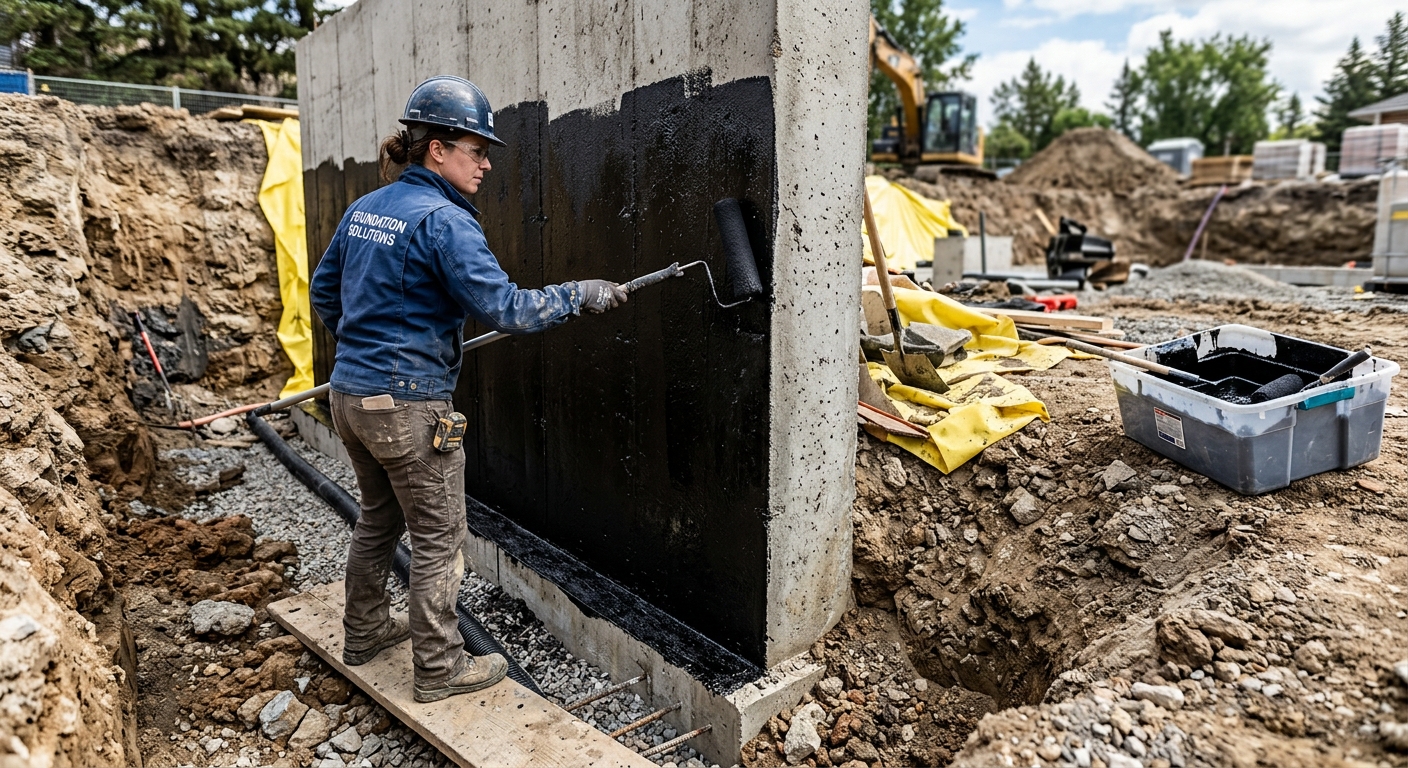
Basement waterproofing options and costs in Northmount
Northmount, Alberta has plenty of basement homes—and the waterproofing approach often depends on how older drainage systems have held up in Calgary’s clay-heavy soils. In a community of about 2,902 residents (Statistics Canada, 2021 Census), most streets connect into the wider Calgary market where basements were commonly built with earlier tar-and-paper methods and weeping tile that may be long past its serviceable life. In practice, that means failures show up as localized wall seepage, damp corners, or slow slab/footing wetting rather than sudden catastrophic collapse.
Calgary-area waterproofing costs are also shaped by southern Alberta’s freeze–thaw cycles: winter crack widening and spring meltwater can drive water through joints and hairline cracks, increasing the amount of prep and targeted crack repair required. Labour availability can affect pricing too—exterior work needs excavation crews, disposal handling, and tight scheduling for backfill, while interior work can be completed faster and with less disruption.
In Northmount, contractor demand is especially high for homes around the more established residential pockets where lots are mature, landscaping is dense, and access is tight—projects in and around older inner-street lanes typically cost more to excavate around mature trees, fences, and settled patios. Once you know which method fits the leak pattern, you can compare realistic price bands in the table below.
| Method |
What It Addresses |
Disruption Level |
Durability |
Price Range |
| Exterior excavation + new membrane + drainage tile |
Primary water entry control by stopping water before it reaches the foundation, plus reliable exterior drainage away from walls |
High (excavation, patio/landscape impacts, regrading) |
High (typically 25+ years when installed to grade and protected correctly) |
$9,500 – $25,000 |
| Interior perimeter drain channel + sump pit |
Water management after entry; reduces hydrostatic pressure at the slab edge and collects seepage |
Medium (interior concrete/chase work, limited disruption) |
Good (often 15–25 years depending on sump components and maintenance) |
$6,000 – $14,500 |
| Foundation crack injection (epoxy or polyurethane) |
Sealing cracks and joints to stop seepage pathways; epoxy is best for stable, non-moving cracks; polyurethane targets active leaks |
Low to medium (minor interior prep; exterior rarely disturbed) |
Medium to high (often 10–20 years; depends on crack movement and wall conditions) |
$750 – $1,800 |
| Sump pump installation (primary + battery backup) |
Active pumping control to prevent basement flooding during storm events and power interruptions |
Low to medium (pit creation varies; electrical work required) |
High when backup is included (meets better reliability expectations) |
$1,200 – $3,000 |
| Window well drain installation |
Stops water pooling at window wells and routes it away from the foundation wall/egress area |
Low to medium (excavation in window area) |
Good (often 10–20 years) |
$900 – $2,200 |
| Lot re-grading / downspout extension |
Redirects surface water away from the foundation; reduces surcharge on weeping tile/perimeter drains |
Low to medium (landscaping adjustment) |
Low to medium (depends on ongoing grading maintenance) |
$1,200 – $4,500 |
Prices are estimates only and vary by project scope, site access and material selection.
What affects the price of waterproofing in Northmount
In Northmount and across the Calgary region, it’s common to see the same basement waterproofing “category” quoted 30–50% apart. The reason usually isn’t the product—it’s the site conditions, the chosen system (symptom control vs source control), and how much hidden work shows up once we open up walls and floors. For example, an interior perimeter drain with a sump can look straightforward, but when we discover failed weeping tile, heavy efflorescence, or multiple crack pathways, the job expands quickly.
Three drivers separate Calgary-area costs from the national average: soil type, water table conditions, and freeze–thaw. Calgary sits on predominantly clay and clay‑till soils that hold water and expand when saturated; as they freeze, they can exert higher lateral pressure on foundation walls and widen existing cracks, meaning more prep, more crack injection, and sometimes additional drainage capacity. In pockets where groundwater and storm events elevate hydrostatic pressure, sump systems may run more often and need robust backup reliability. Meanwhile, older neighbourhood housing stock increases the frequency of failing weeping tile and localized seepage in poured-concrete or block foundations—so contractors allocate more time for assessment and targeted remediation.
Concrete examples in Northmount: if you have a basement leak near an older exterior patio, exterior excavation may jump toward the upper end of the exterior band (for instance, $9,000–$25,000) due to deeper dig, disposal of clay spoils, and careful backfill compaction. If access is tight and we can correct cracking and install an interior drainage/sump instead, you may land in the interior range (commonly $5,000–$15,000) because we avoid full excavation and keep disruption lower. The key is matching the system to how water gets in—surface runoff vs seepage through cracks vs hydrostatic pressure against the slab edge.
| Price Factor |
Why It Matters |
Cost Impact |
| Interior vs. exterior approach — interior is less disruptive but addresses symptoms |
Source control exterior work stops water before it reaches the wall; interior systems manage collected water after entry |
Interior can be 30–60% less; exterior rises with excavation and regrading |
| Foundation type — poured concrete vs. block vs. stone vs. ICF |
Different wall textures and crack patterns change prep, sealing method, and drainage strategy |
Block walls often require more interior drainage; complex walls add labour |
| Soil type — clay expands more than sand, adding pressure |
Saturated clay increases lateral pressure and crack reopening in freeze–thaw |
More drainage capacity and longer-lasting sealing approach may be required |
| Crack type and length — hairline vs. structural horizontal cracks |
Horizontal/structural cracks may signal movement and may require engineering assessment |
Structural work can significantly increase scope beyond simple injection |
| Sump pump backup system — battery or water-powered backup needed |
Backup reduces flood risk during power interruptions during spring melt and storms |
Adds cost but improves reliability; often a worthwhile upgrade |
| Access — landscaping, decks, or driveways must be removed for exterior |
Restricted access increases excavation time and reinstatement work |
Can push costs toward the higher end of exterior bands |
| Weeping tile age — original tile (60+ years) may be completely failed |
Failed exterior drainage forces interior systems to carry more load |
May trigger added interior drains/sump or exterior rework |
| Mould or efflorescence remediation required before sealing |
Sealers won’t bond properly over contaminated or actively efflorescing surfaces |
Requires additional prep and curing time before waterproofing |
Permits & regulations in Alberta
In Alberta, foundation excavation, structural crack repair, and changes to lot drainage typically require a building permit. If a project involves connecting a sump discharge line to the storm or sanitary sewer, you’ll need municipal approval before work begins. For structural crack repair—especially horizontal cracks in block walls, major step cracking, or any pattern suggesting movement—a structural engineer’s assessment is often required to determine whether underpinning or other structural work is needed.
For homeowners in Northmount, the easiest way to verify compliance is to ask the contractor, in writing, what portion of your scope needs a permit. Then you should confirm the contractor will pull the permit (if required) or coordinate with you on the application. Next, verify contractor credentials: (1) Alberta licence information through the appropriate online registry, (2) liability insurance certificate that lists your address as the job site and shows sufficient coverage, and (3) WSIB/WCB clearance if they will have workers on site.
Finally, request proof before work starts: a current certificate of insurance, and clearance letters/status documents for workers’ compensation. If the contractor is proposing structural repairs, ask whether they carry engineering support or work with a stamped engineer. This protects you if conditions change once concrete is opened up during excavation or crack prep.
Interior vs exterior waterproofing — what does Northmount need?
The fundamental difference is that exterior waterproofing is source control, while interior waterproofing is water management. Exterior excavation (full perimeter excavation) allows us to install a continuous membrane and new drainage tile at the correct slope, then backfill and regrade so water is directed away from the foundation. That’s the most reliable approach when the main issue is how water reaches the wall—common with failed original weeping tile, saturated clay around the foundation, and freeze–thaw-driven widening of existing joints.
Interior waterproofing—like a perimeter drain channel, sump pit, and sump pump—works when water has already found a path into the basement. It reduces pooling and helps manage hydrostatic pressure at the slab edge, but it does not stop water pressure on the exterior wall itself. In Northmount’s Calgary climate, this matters because winter crack expansion and spring melt can keep pushing water inward; for poured concrete walls, crack injection combined with an interior drain/sump often performs well, while block foundations frequently benefit from interior drainage as a practical complement when full excavation is difficult.
Sump backup is also worth considering. During spring flooding and power interruptions, a primary sump pump can be overwhelmed if electricity fails mid-event. Adding battery backup (or an appropriate alternate backup method) reduces the chance of a basement event while the grid is down.
Where the price difference is justified: if you’re seeing recurring wetting along multiple exterior wall sections after freeze–thaw, the exterior system may be worth the jump toward the $9,000–$25,000 band because it rebuilds drainage at the source. If only one corner shows active seepage and access prevents excavation, interior drainage and repairs can land in the $5,000–$15,000 range and still get the basement dry—so long as we address crack pathways and ensure pumping capacity is properly sized.
| Method |
Best For |
Addresses Source? |
Disruption |
Lifespan |
Price Band |
| Full exterior excavation + membrane |
Widespread seepage, failed exterior drainage, or high hydrostatic pressure along multiple wall sections |
Yes |
High |
25+ years (when installed continuously and protected) |
$9,500 – $25,000 |
| Interior French drain + sump system |
Water that enters through cracks/joints and needs removal from the basement side |
No (manages after entry) |
Medium |
15–25 years with correct sizing and maintenance |
$6,000 – $14,500 |
| Crack injection — epoxy (structural) |
Stable, non-moving cracks in poured concrete where water entry is through a defined pathway |
Partly (seals a pathway) |
Low to medium |
10–20 years when cracks remain stable |
$750 – $1,500 |
| Crack injection — polyurethane (active leak) |
Active seepage, joints with ongoing moisture, and “weeping” cracks needing flexible sealing |
Partly (seals an active pathway) |
Low to medium |
10–18 years depending on pressure and movement |
$950 – $1,800 |
| Interior drain channel only (no sump) |
Light seepage where gravity drainage to an existing system is feasible |
No (still after entry) |
Medium |
5–12 years (more sensitive to system flow changes) |
$5,000 – $10,000 |
| Re-grading + downspout extensions |
Surface water problems that create wet spots after rain/snowmelt |
No (does not address wall cracks directly) |
Low to medium |
3–8 years unless maintenance is kept up |
$1,200 – $4,500 |
How to choose a waterproofing contractor in Northmount
Start by confirming the contractor is properly eligible to work in Alberta and has the coverage to protect you. Ask for their Alberta licence details (or the relevant proof of registration/eligibility), then request a certificate of liability insurance for your project and review that it includes your address and adequate coverage limits. For workers on site, get WSIB/WCB clearance/status documentation so you’re not exposed if an employee is injured. A reputable Northmount contractor will share these quickly—before you sign anything.
Next, require 2–3 written, itemised quotes that separate labour and materials (membrane, drainage tile, pumps, drain components, crack injection product, disposal, and backfill/compaction steps). Avoid vague “we’ll waterproof the basement” language. Review what’s excluded: is demo included, are efflorescence/mould prep steps included, and does the quote include permit pulling if required for excavation or drainage changes? Also confirm disposal of clay spoils and restoration (landscaping/patio/grade) are specified or clearly excluded.
Warranty matters too. Get the workmanship warranty length in writing, ask whether product/manufacturer warranties apply for the exact system installed, and confirm whether warranties are transferable to future owners. For payment, never pay more than 10–15% upfront; hold back the remainder until completion and final walkthrough. Finally, obtain a written start date and an estimated completion timeline that accounts for curing time, inspection/permit steps, and seasonal constraints typical in Calgary.
- Ask which leak pathways were identified (surface runoff vs crack seepage vs weeping tile failure) and how they’ll be verified.
- Confirm whether your scope includes permit pulling for excavation/lot drainage changes and any required structural assessment.
- Require itemised pricing (labour vs materials) rather than lump sums.
- Confirm disposal and backfill compaction requirements are included (clay disposal fees and compaction matter).
- Get the exact waterproofing system spec: membrane type, drainage tile, filter fabric, and pipe slope/grading.
- Clarify if crack injection will be epoxy (stable) or polyurethane (active) and how they’ll decide.
- Ask for sump pump brand/model and whether battery backup is included and wired correctly.
- Request a workmanship warranty in years and what “serviceable” means during the warranty period.
- Ask whether warranties are transferable and whether documentation is provided at closeout.
- Use a payment schedule capped at 10–15% upfront and confirm holdback terms.
- Get the restoration scope in writing (regrading, topsoil, sod/seed, patio/step reinstatement if applicable).
- Ensure the contractor can provide clear proof of liability coverage and WSIB/WCB status before starting.
In Northmount, watch for red flags like: (1) quotes that skip a proper site assessment or refuse to explain leak pathways, (2) no mention of permit needs for excavation/structural crack repair, (3) workmanship-only warranties with no product/system warranty documentation, (4) vague exclusions such as “restore as required” without restoration details, and (5) demands for large upfront payments with no holdback until the final walkthrough.
Frequently asked questions — waterproofing in Northmount
What drainage issues are most common in Northmount homes?
In Northmount and the broader Calgary area, the most common drainage issues typically come from older perimeter drainage systems and surface water management. Many basements experience seepage along wall-floor intersections because older weeping tile systems can clog or fail, and clay soils around the foundation can stay saturated longer. Freeze–thaw then widens existing cracks and joints, so meltwater and spring runoff find a pathway into poured-concrete or block foundations. You’ll often see damp corners, efflorescence (white mineral deposits), and recurring wet spots after heavy rain or rapid snowmelt.
If drainage is the driver, addressing downspouts and grading alone sometimes helps temporarily, but persistent leaks usually require interior drainage (French drain/sump) or exterior source control. A contractor will typically inspect for slope, discharge points, crack patterns, and whether the perimeter drainage is functioning before recommending a full system.
How do I choose a waterproofing contractor in Northmount?
Choose a Northmount contractor based on proof, not promises. First, verify the Alberta licence/eligibility they operate under, then request a current certificate of liability insurance and confirm workers’ WSIB/WCB clearance/status. Next, ask for 2–3 itemised written quotes that break down labour and materials instead of lump sums. The scope should clearly state what’s included: demo, crack prep, disposal, membrane/drain components, sump pump specs (including backup if quoted), and restoration/regrading.
Also read exclusions carefully. Does the quote include permit pulling where required for excavation or drainage changes? What happens if they discover more failed tile than expected? Finally, ensure warranties are written: a workmanship warranty in years plus product/system warranty documentation. If a contractor won’t put these details in writing, that’s a strong sign to keep looking.
What is a battery backup sump pump and do I need one in Northmount?
A battery backup sump pump is a secondary pumping system that kicks in during a power outage, so water removal doesn’t stop when electricity fails. In Alberta—especially during spring melt events when storms and grid interruptions can occur—power reliability is a real concern. In Northmount, if you have recurring wetting, a history of sump running often, or visible seepage during heavy rains, backup is usually worth planning from day one rather than adding later.
In many Calgary-area quotes, adding battery backup can bring sump projects toward the higher end of the sump band (for example, around $1,200–$3,000 depending on the system and pit work). Whether you “need” it depends on risk: if your basement is finished, if you’ve had past outages, or if you’re installing a new sump as part of an interior system, backup significantly reduces flood risk.
How much does basement waterproofing cost in Northmount?
Basement waterproofing in Northmount typically falls within established Calgary-area price bands depending on whether you’re doing exterior source control or interior water management. For interior approaches (perimeter drain channel, sump pit, and pumping), many homeowners land in a range commonly seen as $5,000–$15,000. Crack repair alone can be far less, often starting around $500–$1,800 depending on crack length and whether the crack is active. Exterior excavation with new membrane and drainage tile is usually the largest scope, commonly around $9,000–$25,000 depending on access, excavation depth, and disposal needs.
As a quick example, if you only have one active leak pathway, crack injection may stay closer to the lower end. If you need continuous exterior drainage and membrane for multiple walls, budget closer to the exterior range. Exact pricing changes with access (decks, driveways, patios), clay spoil disposal, and how much restoration is included.
Interior vs exterior waterproofing — which is better?
“Better” depends on what’s causing the water in your Northmount basement. Exterior waterproofing is generally best for source control: it prevents water from reaching the foundation by installing a continuous membrane and proper drainage tile. It’s also the most durable solution when exterior drainage has failed or when hydrostatic pressure is actively pushing water into the foundation. The trade-off is disruption—full excavation often impacts landscaping and requires more restoration—and it usually costs more.
Interior waterproofing is often the best choice when excavation is difficult or when you’re addressing symptoms after water enters. A perimeter drain channel and sump can be effective, especially when combined with appropriate crack injection. In freeze–thaw climates like Calgary’s, interior systems still require correctly sized pumping and (ideally) backup reliability during storm and outage periods.
If you’re deciding strictly on cost: exterior typically starts around $9,000 and can go up to $25,000, while interior systems commonly fall around $5,000–$15,000. If the leak pattern indicates exterior water reaching the wall, exterior may be the better long-term investment even though it costs more upfront.
Why is my basement leaking in Northmount?
Basement leaks in Northmount usually come from one (or a combination) of three causes: surface water, perimeter drainage failure, or foundation cracks/joints opening during freeze–thaw. Clay-heavy soils around Calgary foundations hold water and expand when saturated, increasing pressure against foundation walls and pushing seepage through cracks. In spring, meltwater and runoff can overwhelm undersized or clogged weeping tile, especially in older neighbourhoods where drainage systems weren’t designed for today’s storm patterns.
Leaking can also be localized—like along a single wall segment—because a specific crack pathway or window well has become the entrance point. If you notice efflorescence, damp corners, or water near the slab edge, it often indicates water is moving through the foundation or along wall-floor interfaces rather than only from surface splash.
A proper assessment (crack mapping, checking downspout/grade discharge, and evaluating drainage performance) is the difference between sealing symptoms once and stopping the entry pathway for the long term.