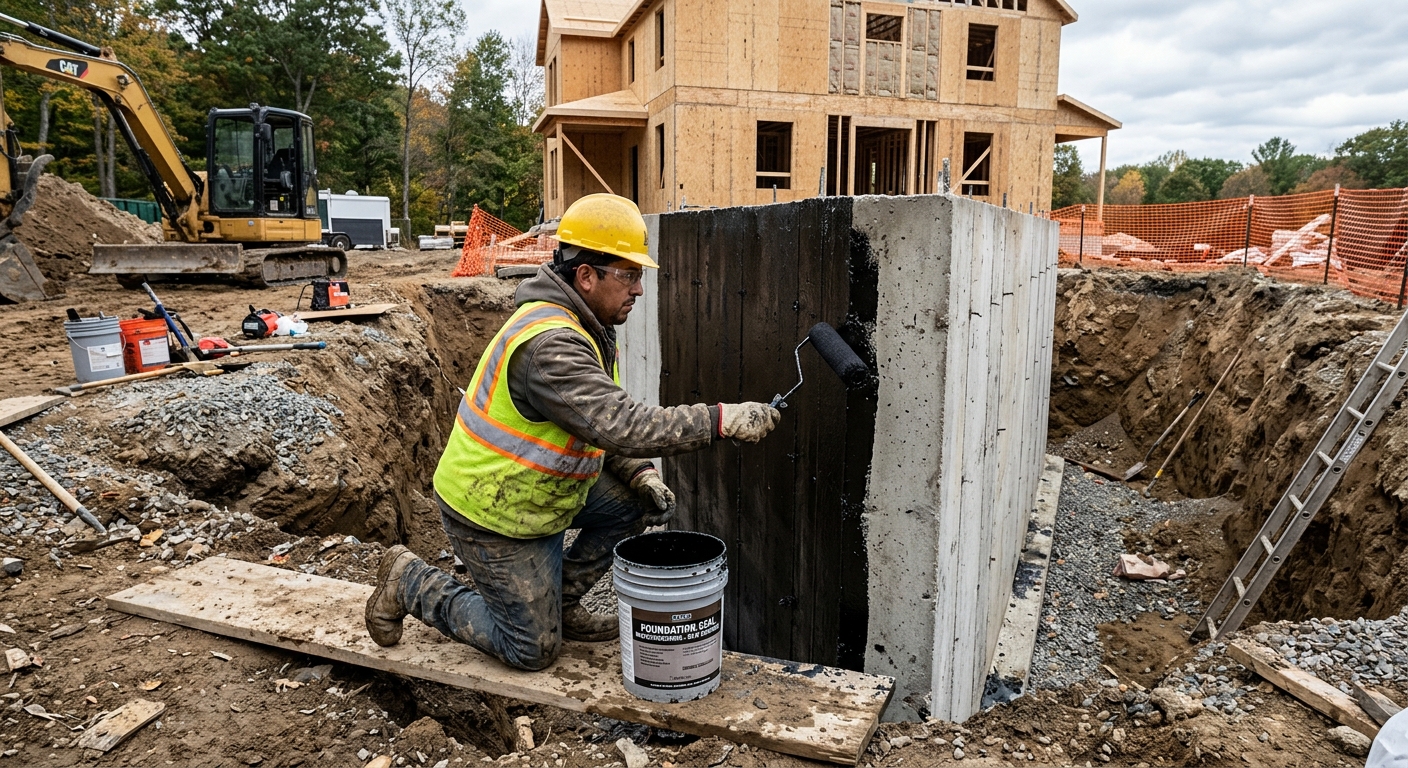
Basement waterproofing options and costs in Silver Heights
In Silver Heights, Ontario, basement waterproofing is less about “one magic coating” and more about choosing the right system for how water is getting in. With a population of 8,235 (Statistics Canada, 2021 Census), local contractors see steady demand because many older Toronto-area basements were built with drainage that’s now failing—especially in the 1960–1970s housing stock that’s common across the Toronto economic region. In these homes, original tar-and-paper style barriers and early weeping tiles often corrode, collapse, or clog over time, so you end up with damp concrete, efflorescence, or seasonal seepage rather than one dramatic exterior failure.
Toronto-area pricing is shaped by mixed glacial till and dense clay pockets that hold water against foundation walls, then expand during freeze–thaw. That movement increases lateral pressure on walls and widens cracks at cold joints, tie holes, and block mortar lines. It also affects labour planning: exterior work in tight urban lots often requires careful hand-digging, managing backfill, and working around landscaping, additions, or shared driveways—availability and site-access constraints can drive costs up or down.
In Silver Heights—especially near older residential pockets where clay and older drainage are both common—many homeowners start with interior drainage or crack work, then move to exterior excavation when seepage keeps recurring. The table below summarizes the most common options and realistic cost ranges, so you can compare apples to apples before you meet a contractor.
| Method |
What It Addresses |
Disruption Level |
Durability |
Price Range |
| Exterior excavation + new membrane + drainage tile |
Lowers hydrostatic pressure at the source by replacing the membrane system and exterior drainage |
High (excavation, landscaping removal, backfill and restoration) |
Long-term when properly detailed on glacial till/clay sites |
$7,000–$25,000 |
| Interior perimeter drain channel + sump pit |
Collects seepage that enters through cracks/cold joints and routes it to a sump |
Medium (floor cutting along perimeter, limited interior restoration) |
Very good for chronic seepage, especially with failing exterior weepers |
$3,500–$15,000 |
| Foundation crack injection (epoxy or polyurethane) |
Stops isolated crack pathways—epoxy for structurally stable cracks, polyurethane for active leaks |
Low to Medium (drilling/patching, minimal demolition) |
Best for targeted leaks; may require drainage if hydrostatic pressure continues |
$600–$3,000 |
| Sump pump installation (primary + battery backup) |
Prevents basement water accumulation during heavy spring rains and power interruptions |
Medium (electrical work, pit installation, floor and wall finishing) |
Long-term with backup system and correct discharge line routing |
$800–$3,500 |
| Window well drain installation |
Reduces water ingress at egress points by improving drainage around window wells |
Low to Medium (excavation around wells, grading adjustments) |
Good when paired with proper weeping tile/downspout detailing |
$1,000–$4,500 |
| Lot re-grading / downspout extension |
Redirects roof runoff away from foundations to reduce surface infiltration |
Low to Medium (soil work, minor landscaping restoration) |
Moderate; helps most when combined with drainage corrections |
$700–$4,000 |
Prices are estimates only and vary by project scope, site access and material selection.
What affects the price of waterproofing in Silver Heights
If you receive two quotes for what sounds like the same basement waterproofing job in Silver Heights, it’s not unusual to see price gaps of 30–50% across the Toronto area. That difference usually comes down to site conditions and the level of water management required—not just the “type” of product. A contractor’s labour costs, equipment needs (hand-digging vs machine excavation), disposal fees, and how much restoration is included all affect the final number.
The three biggest drivers that separate regional costs from the national average are soil type, water table, and freeze–thaw. Toronto-area clay-heavy soils expand when saturated and can push laterally against foundation walls, worsening crack movement over a few winters. When foundations experience repeated freeze–thaw cycles, tiny defects that would be manageable in mild climates can become active pathways. In areas where water tables are relatively high, sump pump systems run more often and require properly sized sumps, discharge lines, and often backup power—especially during spring wet periods.
Concrete examples from Silver Heights basements: (1) A poured-concrete wall with stable, hairline vertical cracks often responds well to targeted injection (commonly within the $600–$3,000 band) if bulk water is controlled; (2) A block foundation with weeping tile failure and ongoing seepage usually needs interior perimeter drainage plus sump, often in the $3,500–$15,000 range; (3) If the exterior excavation is obstructed by a deck, walkway, or shared driveway access, the project can shift from the lower side of the $7,000–$25,000 exterior band toward the upper end because the crew relies more on labour-intensive hand methods.
Housing age also matters: older drainage infrastructure—sometimes decades old—can be completely failed even when the basement walls look “mostly fine,” which is why the scope (and price) can rise quickly when interior dampness progresses to recurring water events.
| Price Factor |
Why It Matters |
Cost Impact |
| Interior vs. exterior approach — interior is less disruptive but addresses symptoms |
Exterior removes water at the wall/source; interior manages what gets through |
Interior often costs less, but repeated seepage can increase overall cost over time |
| Foundation type — poured concrete vs. block vs. stone vs. ICF |
Wall materials respond differently to pressure and crack patterns |
Block frequently needs perimeter drainage; poured concrete may be crack-focused |
| Soil type — clay expands more than sand, adding pressure |
Clay saturation during freeze–thaw increases lateral wall stress |
Often increases labour and the likelihood of needing full exterior or drainage upgrades |
| Crack type and length — hairline vs. structural horizontal cracks |
Structural or horizontal movement can signal larger stability concerns |
Structural repairs can move the project into higher bands due to engineering and staging |
| Sump pump backup system — battery or water-powered backup needed |
Ontario spring storms and occasional outages make backup important |
Backup can add cost, but it reduces the risk of freeze/water damage during failure |
| Access — landscaping, decks, or driveways must be removed for exterior |
Urban lot constraints increase demolition and restoration scope |
Access limitations are a frequent reason quotes differ by 30–50% |
| Weeping tile age — original tile (60+ years) may be completely failed |
Old tile can collapse, clog, or detach |
If replacement is needed, exterior excavation or interior system sizing increases |
| Mould or efflorescence remediation required before sealing |
Sealers and membranes don’t bond well when surfaces are contaminated |
Remediation adds time/materials before waterproofing can proceed |
Permits & regulations in Ontario
In Ontario, many basement waterproofing scopes are straightforward, but several types of work can trigger permit requirements—particularly when the project changes drainage, affects foundation elements, or involves structural considerations. In general, foundation excavation tied to drainage improvements and most foundation crack repair that involves structural assessment typically require a building permit. If you’re altering lot drainage (for example, changing downspout routes, adding new drainage discharge, or modifying how water leaves the site), municipal approval and a permit are often required depending on how the work interfaces with grading and drainage infrastructure.
Sump pump installations can also require approval when discharge connects to a municipal system (storm or sanitary). A contractor should clarify whether the discharge is to a permitted drain connection, an ejector well, or a surface discharge with proper grading. For structural crack repair—especially horizontal cracks in block walls or any signs that suggest movement—an engineer’s assessment is commonly needed to determine whether underpinning or other structural work is required.
To verify your contractor is properly set up in Silver Heights, start with Ontario contractor licensing information online and confirm they’re registered for the work they’re doing. Then request (and verify) a current certificate of insurance that includes liability coverage for the job. Finally, ask for proof of WSIB/WCB clearance or coverage documentation before work begins; don’t rely on verbal confirmation. If engineering involvement is claimed for structural work, ask to see how they document it in the scope so you’re not left without the right support if hidden conditions are found.
Interior vs exterior waterproofing — what does Silver Heights need?
The fundamental difference is source control versus water management. Exterior waterproofing (full excavation, new membrane, new drainage tile, and backfill) addresses water at the wall where it enters. That tends to be the most permanent solution for Toronto-area clay and mixed glacial till conditions because it reduces hydrostatic pressure and helps manage lateral water movement against foundation walls. The trade-off is disruption: excavation in Silver Heights often means removing landscaping, working around decks or driveways, and restoring yard surfaces.
Interior waterproofing manages water after it enters. A perimeter drain channel and sump pit collect seepage through cracks/cold joints and discharge it away. It’s less invasive and often chosen first when exterior access is restricted or when weeping tile is already failed and replacement would be costly. For Toronto housing stock, a practical pattern is: poured concrete walls often seal better with properly chosen crack injection (epoxy for stable cracks, polyurethane for active leakage), while block foundations frequently benefit from interior drainage as a complement because block mortar pathways and pressure behind the wall can keep driving moisture.
Given Ontario conditions, sump pump backup matters. During spring wet spells, basement water events can coincide with power interruptions; backup (battery or water-powered) reduces the chance that a sump failure turns seepage into flooding. If your basement experiences recurring dampness, efflorescence, or water during snowmelt, an interior drainage system with backup is usually worth budgeting for—even if you start with targeted crack work.
Example: if you’re seeing localized seepage at one crack, injection might land around the $600–$3,000 band. But if the basement stays damp after crack repair, that’s often a sign the wall is still under pressure and the system needs a perimeter drain and sump—commonly $3,500–$15,000—rather than more injections. Exterior excavation can be justified when you want true source control or you’re dealing with widespread lateral pressure on clay sites, often within the $7,000–$25,000 band.
| Method |
Best For |
Addresses Source? |
Disruption |
Lifespan |
Price Band |
| Full exterior excavation + membrane |
Widespread seepage, failing exterior drainage, or clay/lateral pressure scenarios |
Yes |
High |
Long-term when drainage tile and membrane detailing are correct |
$7,000–$25,000 |
| Interior French drain + sump system |
Chronic seepage with limited exterior access or partially failed weeping tile |
No (it manages water after entry) |
Medium |
Very good with proper discharge routing and backup power |
$3,500–$15,000 |
| Crack injection — epoxy (structural) |
Stable cracks with no active flow, often in poured concrete basements |
Partially (blocks pathways once injection is fully cured) |
Low to Medium |
Good for non-moving cracks |
$600–$3,000 |
| Crack injection — polyurethane (active leak) |
Active seepage or damp cracks where water is still moving through |
Partially (stops the pathway from the inside) |
Low to Medium |
Good when the right material is matched to the crack condition |
$700–$3,500 |
| Interior drain channel only (no sump) |
Minor seepage loads where gravity drainage is reliable |
No |
Low to Medium |
Limited by discharge capacity and local water management |
$1,500–$6,500 |
| Re-grading + downspout extensions |
Surface runoff issues where water is entering from around the perimeter |
Sometimes (reduces volume at the source, but not wall pressure) |
Low to Medium |
Moderate; works best when combined with proper drainage |
$700–$4,000 |
How to choose a waterproofing contractor in Silver Heights
Choosing the right waterproofing contractor in Silver Heights starts with verifying Ontario requirements and then locking the scope down so you’re not paying for “allowances.” First, ask for proof of Ontario contractor licensing for the work they’re claiming. Next, request a certificate of insurance showing liability coverage for the job and confirm the policy is current. For work performed by trades, ask for WSIB/WCB clearance (or proof of coverage/clearance as applicable) before any demolition starts; this protects you as the homeowner.
Then get 2–3 itemised written quotes. You want line items separating labour, excavation (if applicable), materials (membranes, drainage tile, pipe, sump components), electrical work for pumps, disposal, and restoration. Prefer quotes that describe how water is routed (discharge method, where it goes, and whether backup is included) rather than one lump sum. Scope questions to ask: What is excluded? Is the permit included where required? Is demolition and restoration (slab cutting, drywall protection, landscaping reinstatement) part of the bid? Will they address mould or efflorescence remediation before sealing?
Warranty should be clear: workmanship warranty length, product/manufacturer warranty, and whether it’s transferable if you sell the home. For payment, never pay more than 10–15% upfront; hold back a final portion until the work is complete and you’ve inspected it. Finally, insist on a start date and a completion timeline in writing so you can plan around winter access constraints and curing times.
- Confirm they’ve done foundations in clay-heavy, freeze–thaw Toronto-area conditions—not just generic “basement leaks.”
- Ask for a site visit and moisture assessment, not just a brochure recommendation.
- Request a written scope with measurements (linear metres/feet of drain, length of crack injection, membrane coverage).
- Verify permit responsibility in writing (if required) and who pulls it.
- Check insurance COI dates and ensure liability coverage includes construction/contractor work.
- Ask for WSIB/WCB clearance or documentation before work begins.
- Confirm sump discharge routing and whether it’s permitted for your lot.
- Require a backup plan for sump outages (battery or water-powered backup) where recommended.
- Make sure disposal/loading fees and restoration are listed (dump fees and landscaping reinstatement).
- Clarify warranty terms for both workmanship and product (and whether you get it in writing).
- Do not accept “cash today” pricing without an agreement and scheduled milestones.
- Ask what happens if they find additional failed drainage or more extensive cracking than expected.
Red flags in Silver Heights include: contractors who refuse to itemise labour/materials; bids that omit discharge routing details for sumps; promises of “one-time sealing” without addressing exterior drainage or hydrostatic pressure; vague warranties (no length or no workmanship coverage); and crews who start demolition without confirming the right permits or insurance/WSIB documentation.
Frequently asked questions — waterproofing in Silver Heights
How long does basement waterproofing take in Silver Heights?
In Silver Heights, typical timelines depend on whether you’re doing exterior excavation or an interior solution. Interior perimeter drainage with sump installation often takes about 3–7 working days once materials and access are ready, because floor cutting, drain placement, sump pit work, and finishing steps follow in sequence. Crack injection is usually faster—often 1–3 working days total—since it’s targeted drilling and injection with patching. Exterior waterproofing is longer because it includes excavation, membrane and drainage tile installation, backfill, and restoration; common schedules run 1–3 weeks depending on landscaping removal/restoration and curing time. If your contractor discovers additional drainage failure (collapsed weeping tile sections common in older areas), the timeline can expand.
What is a weeping tile and does my Silver Heights home have one?
A weeping tile is the underground perimeter drainage system installed around many foundations to collect water and route it to a sump pit or discharge point. In older Toronto-area homes—often built with original drainage that’s now 60+ years old—it may be clay tile that has cracked, detached, or clogged, which can lead to dampness and efflorescence instead of obvious exterior wall failure. Your Silver Heights home may have a weeping tile if it was built with a basement drainage system, but it can be hidden, abandoned, or partially failed. The best way to confirm is to review original build notes (if available) or to ask for an inspection during your waterproofing assessment—contractors can often evaluate with inspection access and test drainage patterns.
Can I waterproof my basement in winter in Silver Heights?
Yes, it’s sometimes possible in Ontario, but it depends on the method. Interior drainage and sump-related work is often workable in winter because it doesn’t require large exterior excavations that may be impossible with frozen ground. Crack injection can also be done when the temperature is suitable for product curing and the contractor can prepare the crack surfaces safely. Exterior excavation is the main challenge in winter: frozen clay and glacial till backfill can slow excavation, complicate membrane detailing, and delay proper backfill compaction. If you’re choosing between options, many homeowners start with interior measures in winter and schedule exterior source control for spring thaw, especially when they’re dealing with active seepage driven by freeze–thaw.
What is the difference between waterproofing and damp-proofing?
“Damp-proofing” generally refers to coatings or treatments intended to resist minor moisture and prevent surface dampness. “Waterproofing” is a system designed to manage water pressure and actual seepage pathways—often by combining crack repair, drainage (interior or exterior), and where needed sump pumping and discharge routing. In Silver Heights, where dense clay and freeze–thaw cycles can turn small cracks into active leaks, true waterproofing usually involves addressing hydrostatic pressure. That’s why you’ll often see interior perimeter drains and sump pumps used for chronic seepage, or exterior membrane and drainage tile for source control. Pricing reflects that difference: a targeted crack repair may fall around the $600–$3,000 band, while interior drainage/sump systems commonly sit in the $3,500–$15,000 range.
Will basement waterproofing affect my property value in Silver Heights?
It often can, especially if you document the work properly and solve a recurring moisture problem. In Silver Heights and the broader Toronto market, buyers typically look for evidence that a basement has been protected against dampness, efflorescence, and flooding—especially in homes with post-war foundations where older drainage systems may struggle. A transferable workmanship warranty and clear inspection photos of cracks/drains/membranes can help substantiate the investment. That said, value impact depends on scope: minor cosmetic patching without drainage won’t reassure buyers if seepage continues. Source-control exterior waterproofing tends to be the strongest selling point when feasible, while interior systems can still add value when they’re installed for chronic seepage and include correct sump/discharge and backup where needed.
What drainage issues are most common in Silver Heights homes?
The most common issues in Silver Heights basements typically relate to clay-rich soil retaining moisture, failing original perimeter drainage, and freeze–thaw expanding small defects. Homeowners commonly report damp walls, musty odours, efflorescence on concrete or block, and seepage that worsens during spring snowmelt. Another recurring cause is water moving through cold joints, tie holes, and cracks around foundation penetrations—then turning into an active leak over a few winters. In many post-war and 1960–1980s homes, older weeping tile may be clogged or collapsed, leading to interior dampness rather than clear exterior wall failure. If exterior grading directs roof runoff toward the foundation, that surface infiltration can also amplify the problem.