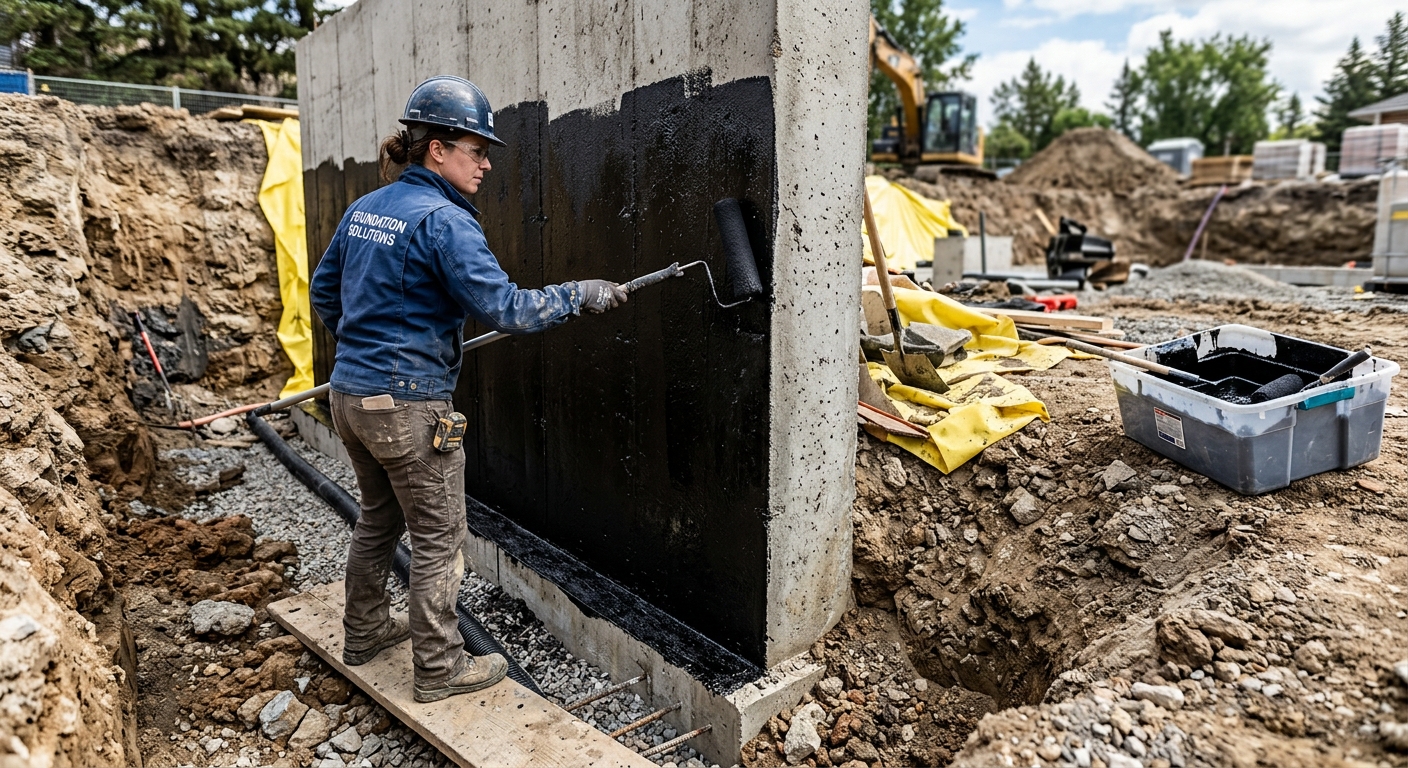
Basement waterproofing options and costs in St. Andrew-Windfields
In St. Andrew-Windfields, basement waterproofing decisions start with a simple question: are you trying to stop water at the foundation, or manage it once it shows up inside? With a local population of 17,812 in the area (Statistics Canada, 2021 Census), there’s a steady mix of older homes alongside newer infill, and that housing age matters—especially because many pre-1980 foundations relied on earlier drainage setups that are now prone to partial collapse, clogs, and failing weeping tile. In Toronto’s broader market, contractors also see a large number of 1960–1980s basements where original drainage may be past its service life, and freeze–thaw cycles can turn hairline cracks into active seepage over just a few winters.
Toronto-area waterproofing costs can move noticeably based on site access, the condition of existing weeping tiles, and whether drainage problems are driven by high lateral pressure from dense clay soils or by localized plumbing failures. Areas in and around the Windfields and nearby Highway 407 corridor often demand interior upgrades, but exterior work ramps up when homeowners are already doing landscaping or are noticing chronic dampness, efflorescence, or water entry after heavy spring melt. The goal is to match the method to the actual water pathway—then build a clear scope so the price reflects your site, not guesswork.
Below is a practical comparison of the most common options and what they typically cost in St. Andrew-Windfields.
| Method |
What It Addresses |
Disruption Level |
Durability |
Price Range |
| Exterior excavation + new membrane + drainage tile |
Hydrostatic pressure and water intrusion at the foundation exterior (source control) |
High (excavation, regrading, landscaping disruption) |
Long-term (commonly the most complete fix when access is available) |
$7,000–$25,000 |
| Interior perimeter drain channel + sump pit |
Water that enters through cracks, cold joints, and weeping tile failure (interior capture) |
Medium (floor cutting near perimeter, patch/finish) |
High (when properly sized and vented, with a reliable pump system) |
$3,500–$15,000 |
| Foundation crack injection (epoxy or polyurethane) |
Isolated crack leaks (epoxy for stable cracks; polyurethane for active seepage) |
Low to Medium (minimal interior work depending on crack access) |
Medium to High (depends on crack movement and preparation) |
$600–$3,000 |
| Sump pump installation (primary + battery backup) |
Relieves interior water and reduces hydrostatic pressure from accumulating water |
Medium (pit excavation, electrical/backup install, discharge piping) |
High (backup matters in spring storms and outages) |
$800–$3,500 |
| Window well drain installation |
Water ingress at below-grade windows and window wells |
Low to Medium (excavation around window well) |
Medium to High (when ties into effective grading/drainage) |
$1,000–$4,000 |
| Lot re-grading / downspout extension |
Redirects surface water away from foundation and reduces ponding around walls |
Low (typically minor soil work and drainage adjustments) |
Medium (best as a supplement to drainage repairs) |
$1,200–$6,000 |
Prices are estimates only and vary by project scope, site access and material selection.
What affects the price of waterproofing in St. Andrew-Windfields
Homeowners in St. Andrew-Windfields often get quotes that differ by 30–50% for the same “basement leak” because waterproofing is site-specific. Two factors can be driving the difference: how much of the water pathway the contractor can actually address (source control versus symptom control), and how much labour is required to access the foundation and remove barriers like decks, landscaping, or tight side-yard conditions.
The three biggest cost drivers that separate local pricing from a broad national average are soil type, water table conditions, and freeze–thaw cycles. In the Toronto region, many areas sit on mixed glacial till and dense clay pockets that hold water against foundations; when saturated, clay can expand and add lateral pressure that worsens cracks over time. During freeze–thaw, small defects widen as water cycles between ice and liquid, so prep and crack selection (epoxy versus polyurethane) become critical. Even when the local water “looks dry” on a sunny day, high seasonal water conditions can increase sump run times and require properly sized discharge and backup.
Here are a few concrete examples from St. Andrew-Windfields: if your home has original weeping tile from an earlier era that’s clogged, the job shifts toward interior drainage and sump capacity—often landing in the $3,500–$15,000 band. If we can access the foundation exterior from the side yard and excavation is practical, exterior waterproofing can fall into the $7,000–$25,000 range, especially when membrane, drainage tile, and regrading are all included. Conversely, an isolated leak caused by a single active crack may be treated with targeted crack injection, typically in the $600–$3,000 range—if the crack is truly isolated and properly prepped.
| Price Factor |
Why It Matters |
Cost Impact |
| Interior vs. exterior approach — interior is less disruptive but addresses symptoms |
Interior work captures water after entry; exterior aims to stop water at the source |
Interior often 40–70% less expensive, but may require sump/ongoing water management |
| Foundation type — poured concrete vs. block vs. stone vs. ICF |
Different materials react differently to cracking and sealing methods |
Poured concrete often seals better with correct crack prep; block often needs more comprehensive drainage |
| Soil type — clay expands more than sand, adding pressure |
Clay saturation increases lateral load and accelerates crack development |
More aggressive drainage/membrane is typically required, pushing costs upward |
| Crack type and length — hairline vs. structural horizontal cracks |
Active, moving cracks need flexible sealing; structural cracks may require engineering |
Structural conditions can add assessment/engineering and expand scope significantly |
| Sump pump backup system — battery or water-powered backup needed |
Power outages can happen during spring storms and flooding events |
Backup increases material/electrical scope, but reduces risk of major overflow |
| Access — landscaping, decks, or driveways must be removed for exterior |
Excavation around additions/shared driveways is labour intensive |
Exterior jobs can jump quickly if removal/rebuild is required |
| Weeping tile age — original tile (60+ years) may be completely failed |
Collapsed/clogged tile changes where water is entering |
Often shifts work toward interior drainage and sump sizing (higher than a “crack-only” fix) |
| Mould or efflorescence remediation required before sealing |
Moisture must be managed before coatings or sealants are applied |
Adds prep labour and containment steps to reduce recurrence |
Permits & regulations in Ontario
In Ontario, some basement and foundation waterproofing work typically requires a building permit—particularly when excavation involves the foundation, when structural crack repair may affect stability, or when you’re changing lot drainage in a way that could affect stormwater flow. In general, foundation excavation, structural crack repair (especially for horizontal cracks in block walls or any signs that suggest movement), and modifications that meaningfully alter drainage typically fall under permit expectations.
It’s also important to note that sump pump installations may require municipal approval when connecting discharge lines to storm or sanitary sewer systems. Even when a contractor can handle the technical work, you should still confirm whether your discharge method needs approval. For structural crack work, a structural engineer’s assessment is often required to determine whether underpinning or other structural measures are necessary before waterproofing proceeds.
For your St. Andrew-Windfields project, verify that the contractor can support structural repairs with appropriate engineering (if needed), carries liability insurance, and has WSIB/WCB coverage. To do this step-by-step: (1) check the contractor’s Ontario licence/registration information through the relevant online registry options available in Ontario; (2) request a certificate of insurance and confirm it includes the work type and is current; (3) ask for WSIB/WCB clearance documentation and confirm that coverage applies to the project and the workers who will be on site; (4) for structural scopes, ask who provides the engineering assessment and whether it will be documented for permit/insurer purposes.
Interior vs exterior waterproofing — what does St. Andrew-Windfields need?
The key difference is that exterior waterproofing targets the source: full excavation, new membrane, new drainage tile, and backfill that directs groundwater away from the foundation. Interior waterproofing manages water after it enters: a perimeter drain channel, a sump pit, and a sump pump. In Toronto’s freeze–thaw environment, that distinction matters—because clay-heavy soils can increase hydrostatic pressure on walls, and failed drainage (like partially collapsed weeping tile) can defeat “surface fixes” alone.
For St. Andrew-Windfields, exterior work makes the most sense when you can access the foundation perimeter and you’re dealing with chronic seepage tied to lateral soil pressure or long-term drainage failure. Interior work is often the practical first step when access is constrained by decks, patios, or tight lots, or when the original weeping tile is too degraded to repair without major excavation. With poured concrete walls, crack injection can perform well as a targeted component (provided the crack isn’t actively moving). With block foundations, interior drainage frequently becomes essential because water pathways can shift through joints and masonry behavior—so pairing crack repair with a perimeter drain and sump is common.
Ontario basement risk is also shaped by power reliability during spring melt and heavy rain: a sump system without backup can leave you exposed when the pump stops. That’s why contractors often recommend primary + backup in chronic seepage homes.
To make the cost trade-off concrete: if you suspect a failed drainage system along the perimeter, an interior French drain + sump approach may land in the $3,500–$15,000 band, while a full exterior excavation + membrane project typically sits in the $7,000–$25,000 band. The higher price is justified when exterior access is workable and the objective is to stop the water pathway at the foundation rather than continuously pumping it out.
| Method |
Best For |
Addresses Source? |
Disruption |
Lifespan |
Price Band |
| Full exterior excavation + membrane |
Chronic seepage from perimeter water pressure; workable excavation access |
Yes (primary source control) |
High |
Long-term |
$7,000–$25,000 |
| Interior French drain + sump system |
Failing weeping tile, seepage through cold joints/cracks, limited exterior access |
No (captures after entry) |
Medium |
High with proper pump sizing and discharge |
$3,500–$15,000 |
| Crack injection — epoxy (structural) |
Stable, dry-to-damp cracks with no ongoing movement |
Partial (seals the crack pathway) |
Low to Medium |
Medium to High |
$600–$3,000 |
| Crack injection — polyurethane (active leak) |
Active seepage/flowing cracks that need flexible sealing |
Partial (seals active pathway) |
Low to Medium |
Medium to High if properly prepped |
$900–$3,200 |
| Interior drain channel only (no sump) |
Very mild seepage or short-duration dampness |
No (does not actively manage accumulation) |
Medium |
Lower in high-water seasons without sump backup |
$2,000–$8,500 |
| Re-grading + downspout extensions |
Surface water issues, ponding near foundation, dryer basements |
Surface source reduction only |
Low |
Medium (works best as a supplement) |
$1,200–$6,000 |
How to choose a waterproofing contractor in St. Andrew-Windfields
Choosing the right waterproofing contractor in St. Andrew-Windfields is mostly about proof: proof they can do the work you need, proof they’re covered if something goes wrong, and proof their scope matches your site conditions. Start with Ontario licensing/registration confirmation (as applicable to their trade category), then request liability insurance and WSIB/WCB coverage and verify it applies to your project. Ask for: (1) a current certificate of insurance (and confirm it names your property or provides project-specific coverage details); (2) WSIB/WCB clearance documentation for the workers who will be on site; and (3) any engineering/structural support documentation if you’re dealing with major cracks or suspected movement.
Next, get 2–3 itemised written quotes—not just a single number. You want a labour + materials breakdown that shows what’s included: membrane type, drainage tile specifications, disposal/restoration allowances, pump model (and whether backup is included), and whether the contractor is pulling permits or coordinating inspections. Read exclusions carefully: disposal of excavated soil, replacement of landscaping/deck sections, and patch/finish scope can vary widely.
For warranty, insist on both workmanship warranty length and the manufacturer’s product warranty terms. Clarify whether warranties are transferable to future owners and whether registration is required. For payment, never pay more than 10–15% upfront; hold back a meaningful portion until the job is complete and you’ve inspected the waterproofing components and finishes.
Finally, get a written start date and completion estimate. In Toronto-area basements, timelines matter because incomplete winterising or rushed backfill can compromise performance.
- Ask how they will diagnose the cause: weeping tile condition, crack mapping, and water source pathway.
- Confirm the exact method for active leaks vs stable cracks (polyurethane vs epoxy injection).
- Require an itemised scope: pump model, backup type, discharge route, and membrane/drainage materials.
- Ask whether a permit is required for excavation or drainage changes, and whether they handle it.
- Confirm disposal and restoration: excavated soil removal, grading, and landscaping/deck reinstatement.
- Verify liability insurance is current and covers the type of work being performed.
- Provide WSIB/WCB clearance for the workers assigned to your job.
- Request proof of prior similar jobs in Toronto-area basements with clay soils and freeze–thaw exposure.
- Get warranty details in writing: workmanship + product warranty, transferability, and exclusions.
- Clarify pump sizing and backup: battery backup or water-powered backup for spring outages.
- Inspect discharge locations and ensure they’re not creating new ponding problems.
- Keep communication in writing: scope changes, change orders, and completion sign-off.
Red flags in St. Andrew-Windfields: (1) they offer a “one-size-fits-all” basement fix without checking drainage tile condition or crack patterns; (2) they won’t provide itemised labour/materials or detailed pump and membrane specs; (3) they ask for a large upfront payment (beyond 10–15%) or refuse staged payments; (4) they can’t show current liability insurance and WSIB/WCB coverage; (5) they dismiss active seepage cracks as “hairline only” and don’t discuss polyurethane or proper crack prep.
Frequently asked questions — waterproofing in St. Andrew-Windfields
Interior vs exterior waterproofing — which is better?
In most St. Andrew-Windfields cases, exterior waterproofing is the “best” long-term option because it addresses the water pathway at the foundation: excavation, membrane, drainage tile, and backfill that reduces hydrostatic pressure. However, it’s also more disruptive and can cost significantly more—often in the $7,000–$25,000 band depending on access. Interior waterproofing (perimeter drain + sump) is usually the better choice when access is constrained by decks, driveways, or tight side yards. It can be strongly effective for chronic seepage, especially when the sump system includes backup, but it doesn’t stop pressure from acting on the wall itself. If you’re unsure, ask the contractor to map the crack/water entry points and confirm whether exterior drainage is feasible.
Why is my basement leaking in St. Andrew-Windfields?
Basement leaks in St. Andrew-Windfields typically come from groundwater and seasonal pressure, not “random bad luck.” Dense clay pockets common around Toronto can hold water against foundation walls, and freeze–thaw cycles can widen small defects and activate them over time. Many homes also have drainage issues: original weeping tile may be partially collapsed or clogged, leaving water to enter through cold joints, tie holes, and cracks. You may also see interior dampness and efflorescence even when the exterior wall looks intact—because the water pathway has shifted to the drainage system rather than an obvious wall failure. If you’re getting water during spring melt, it often points toward drainage and hydrostatic pressure issues rather than a simple cosmetic crack.
How do I know if a foundation crack is serious?
Not every crack is serious, but you should treat certain crack patterns as higher risk. Serious indicators include horizontal cracks that widen over time, step-like cracks that change direction, cracks that show signs of active moisture (dampness, efflorescence, or water seepage), and cracks that appear to align with movement. In Ontario’s freeze–thaw environment, even hairline cracks can become active as water cycles between ice and liquid. The most practical approach is to have the contractor map the crack, assess whether it’s stable, and determine whether injection is suitable. Epoxy injection often suits stable cracks, while active leaks usually need polyurethane. If the crack seems structural, request an engineering assessment before sealing.
How much does foundation crack repair cost in St. Andrew-Windfields?
For isolated foundation cracks, repair costs are often modest compared with full exterior work. In St. Andrew-Windfields, foundation crack repair typically falls around the $600–$3,000 range depending on how many cracks are involved, crack length, access, and whether the leak is active. If the contractor uses polyurethane for active seepage, costs can trend toward the upper end because prep and sequencing are more involved. If multiple cracks are connected to a larger drainage failure or the wall is showing signs of movement, crack repair may become a part of a larger interior drainage or sump scope rather than a standalone fix. Always ask for a crack-by-crack breakdown in the quote.
Do I need a sump pump in St. Andrew-Windfields?
You may need a sump pump if your basement experiences recurring seepage, water accumulation along the perimeter, or higher water events during spring melt. In clay-heavy areas, water can build up behind the foundation and enter through cracks and joints; in those situations, an interior drain system routed to a sump helps manage the water load. Many homeowners also choose a backup system because Ontario power can be disrupted during heavy storms and flooding. If you get only occasional dampness and the source is mainly surface runoff, re-grading and downspout extensions can help without a sump. But if water collects or you’ve had minor flooding, discuss a properly sized sump system with backup rather than relying on coatings alone.
How does St. Andrew-Windfields's soil affect my foundation?
In the Toronto region around St. Andrew-Windfields, mixed glacial till and dense clay pockets can create conditions that stress foundations. Saturated clay expands during freeze–thaw and can exert lateral pressure on basement walls, worsening cracks and increasing seepage risk through cold joints and tie holes. Clay also tends to hold water rather than draining quickly, which means drainage systems may fail sooner or require more careful design and maintenance. That’s one reason contractors focus on matching the approach to local soil conditions: exterior excavation and membrane when source control is practical, or interior perimeter drainage and a sump when exterior access is limited or when original weeping tile has partially failed. A site visit that considers soil saturation and the drainage history is the fastest way to avoid paying for the wrong fix.