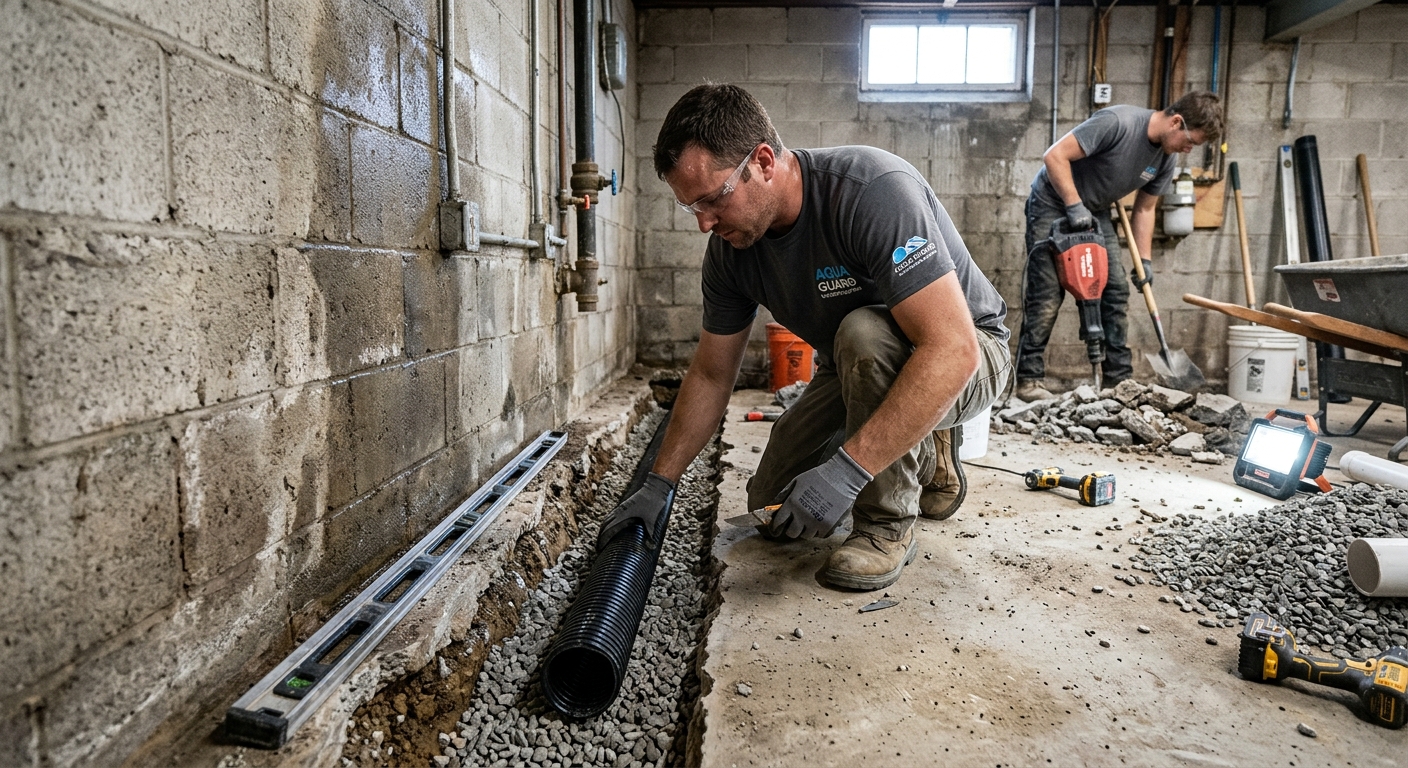
Basement waterproofing options and costs in Bolton
Basement waterproofing in Bolton matters because many homes here—within the Toronto economic region—sit on mixed glacial till and clay pockets that can hold water against foundations. With a population of 26,795 (Statistics Canada, 2021 Census), Bolton’s housing market also has a steady flow of older basements being reopened for repairs, renovations, and finishing projects. In practice, that means contractors keep seeing the same root issues: failing original drains, weakened mortar joints, and cracks that only become obvious after a stretch of heavy rain followed by freeze–thaw.
Pricing is shaped by Toronto-area basement realities. Many post-war and 1960–1980s homes rely on older clay weeping tile or early plastic drainage that’s often partially collapsed or clogged, leading to damp walls, efflorescence, and basement flooding—not always dramatic exterior wall failure. Freeze–thaw cycles then widen hairline defects in poured concrete and block foundations, turning small problems into active leaks over a few winters. It’s also a labour-and-access game: tight urban lots, deck removals, working below deck footings, and excavation around additions or shared driveways can push labour and disposal costs up fast.
In Bolton, trade demand tends to spike around neighbourhoods with higher proportions of mature lots and finished basements (for example, areas close to the downtown core where access is usually tight and re-grading is harder). The next step is comparing methods side-by-side so you can line up the right approach with your leak pattern—then budget confidently.
| Method |
What It Addresses |
Disruption Level |
Durability |
Price Range |
| Exterior excavation + new membrane + drainage tile |
Source water entry by removing hydrostatic pressure; replaces failed drainage and installs a continuous waterproofing system |
High (excavation, landscaping reinstatement) |
Long-term when installed to slope and detail at corners/cold joints |
$7,000 – $25,000 |
| Interior perimeter drain channel + sump pit |
Controls seepage after it enters; captures water at foundation base to reduce wall saturation |
Medium (small interior demo, core drilling) |
Very good for ongoing seepage when sump and discharge are properly detailed |
$3,500 – $15,000 |
| Foundation crack injection (epoxy or polyurethane) |
Stops active leaks and/or seals isolated cracks; targeted fix for specific crack locations |
Low (minimal demolition) |
Strong for properly identified crack type and correct product selection |
$600 – $3,000 |
| Sump pump installation (primary + battery backup) |
Reduces flood risk during high-water periods; backup protects against power outages |
Low to Medium (pit and electrical work) |
High reliability with proper discharge and backup |
$800 – $3,500 |
| Window well drain installation |
Prevents water pooling and overflow at basement windows |
Low to Medium (window well work and grading) |
Good when tied into proper drainage and maintained |
$1,200 – $4,500 |
| Lot re-grading / downspout extension |
Moves roof runoff away and reduces near-foundation saturation |
Low (limited demolition) |
Moderate (depends on ongoing slope and downspout maintenance) |
$1,000 – $6,000 |
Prices are estimates only and vary by project scope, site access and material selection.
What affects the price of waterproofing in Bolton
Two contractors can quote the “same” waterproofing work and still land 30–50% apart in the Toronto area. That’s because waterproofing is detail-heavy: the price often changes based on how far water is travelling, which components are failing (drainage first vs. wall first), how much excavation is truly required, and how constrained the site is. In Bolton, the gap between local bids and a national average typically comes down to three drivers: soil, water table, and freeze–thaw.
First, clay-heavy soils common across parts of Ontario can expand during freeze–thaw and push laterally on foundation walls. That movement worsens cracks and weakens mortar joints over time, so a “seal-only” approach may cost less upfront but can fail sooner if the source water pressure isn’t addressed. Second, higher local water tables in many neighbourhoods raise sump run times and increase the need for proper discharge, routing, and sometimes backup power. Third, repeated freeze–thaw cycles open up minor defects; that means repairs may need to be more extensive than the visible damage suggests.
Here are concrete examples we see around Bolton. If you have efflorescence and a musty smell near a corner where the old weeping tile likely collapsed, interior perimeter drainage and sump work may be the fastest fix, often starting around the interior band of $3,500 – $15,000. If the exterior drainage is completely failed and water is entering along multiple wall sections, full excavation can move you into the exterior range of $7,000 – $25,000—but it’s the only way to correct lateral pressure at the source. And if you’re adding waterproofing around a finished basement with tight access and a partially blocked discharge route, the labour and core-drilling/disposal can add significant cost even when materials are similar.
| Price Factor |
Why It Matters |
Cost Impact |
| Interior vs. exterior approach — interior is less disruptive but addresses symptoms |
Exterior corrects source water entry; interior manages water after entry |
Interior typically cheaper per linear foot, but may recur if hydrostatic pressure remains uncontrolled |
| Foundation type — poured concrete vs. block vs. stone vs. ICF |
Crack pattern and joint detail vary; block walls can need different drainage handling |
Block/older walls often increase labour for prep and drainage detailing |
| Soil type — clay expands more than sand, adding pressure |
Clay saturation increases lateral pressure and accelerates crack movement |
More likely to require exterior membrane/drainage or stronger interior capture (sump) |
| Crack type and length — hairline vs. structural horizontal cracks |
Only certain cracks can be safely injected; horizontal/structural cracks can signal deeper movement |
Structural assessment can add cost; repair scope may expand beyond injection |
| Sump pump backup system — battery or water-powered backup needed |
Ontario outages during spring high-water make backup a risk-reducer |
Backup commonly adds a few thousand dollars depending on system choice |
| Access — landscaping, decks, or driveways must be removed for exterior |
Excavation isn’t just digging; it includes removal, haul-away, and reinstatement |
Access constraints can swing totals by thousands |
| Weeping tile age — original tile (60+ years) may be completely failed |
Old drainage can be collapsed or clogged, limiting how well exterior work can be “partial” |
Often drives full replacement and deeper excavation |
| Mould or efflorescence remediation required before sealing |
Sealers won’t adhere well to active salts and contaminated surfaces |
Can add prep time and require cleaning chemicals and controls |
Permits & regulations in Ontario
In Ontario, homeowners should expect that foundation excavation, structural crack repair, and changes to lot drainage may require a building permit, especially when the work affects load-bearing elements, penetrations, or the exterior drainage system. In addition, sump pump installations that connect into municipal drainage systems (storm or sanitary) typically need municipal approval. The exact trigger depends on where the discharge goes and how it’s tied in, so the contractor should identify the discharge route before work starts.
For structural crack repair—commonly horizontal cracks in block walls, major step cracks, or cracks showing signs of movement—a structural engineer’s assessment is often required to determine whether underpinning, reinforcement, or other structural measures are needed. That’s why the “waterproofing quote” may include engineering support when your crack pattern crosses from cosmetic sealing into possible structural concern.
To verify a contractor in Bolton step by step: (1) Ask for their Ontario licence/registration details and confirm them using the applicable provincial business/contractor registry or the contractor’s listed licence number; (2) Request a current certificate of liability insurance naming you as the certificate holder where applicable; and (3) Verify WSIB/WCB coverage by asking for proof of clearance (or the appropriate coverage documentation). If the contractor can’t provide documentation quickly, treat that as a red flag before you sign. Also confirm whether permits are included in the quote—permit pull responsibilities should be clearly stated in writing.
Interior vs exterior waterproofing — what does Bolton need?
The fundamental difference is that exterior waterproofing aims to stop water before it reaches the foundation, while interior waterproofing manages water once it enters. Exterior work typically includes full excavation along the affected walls, removal of failing drainage, installation of a continuous membrane, and replacement of drainage tile with proper slope and backfill details. It’s the more permanent solution for Bolton homes where clay soils can hold moisture and freeze–thaw can increase lateral pressure. The trade-off is higher cost and more disruption—excavation, landscaping reinstatement, and careful reinstating around decks, steps, and driveways are common in the Toronto market.
Interior waterproofing generally consists of a perimeter drain channel at the foundation base, a sump pit, and sump pump operation. This approach is less invasive and can be the right move when the exterior is too difficult to access or when you need a reliable short- to mid-term control system for chronic seepage. In Bolton, poured concrete walls often seal better with crack injection when the crack is isolated and correctly identified. Block foundations frequently need interior drainage as a practical complement, because water can migrate through mortar joints and through the base area even when patching is done.
Because Ontario winters and spring high-water can create power-risk scenarios, sump pump backup matters. A battery backup or water-powered backup can protect during outages when the water table spikes after rain or snowmelt. For example, if you’re deciding between a crack injection-only plan (~$600 – $3,000) and a full interior drainage + sump system, the higher spend can be justified when water is present along multiple wall sections, with dampness and recurring efflorescence.
| Method |
Best For |
Addresses Source? |
Disruption |
Lifespan |
Price Band |
| Full exterior excavation + membrane |
Multi-line seepage, failed weeping tile, high lateral pressure in clay soils |
Yes |
High |
Long-term with correct detailing and drainage discharge |
$7,000 – $25,000 |
| Interior French drain + sump system |
Chronic seepage, blocked/failed exterior drains where excavation is difficult |
No (manages after entry) |
Medium |
Very good with proper pump sizing and backup |
$3,500 – $15,000 |
| Crack injection — epoxy (structural) |
Non-leaking or stabilized cracks where the crack type supports structural sealing |
No (seals the crack path) |
Low |
Good to long-term when crack movement is controlled |
$600 – $3,000 |
| Crack injection — polyurethane (active leak) |
Active seepage through cracks where water is currently moving |
No (seals the water path) |
Low |
Good for active leaks when injection depth and pressure are matched |
$600 – $3,000 |
| Interior drain channel only (no sump) |
Light seepage where gravity drainage/discharge is reliable and water quantity is low |
No (still after-entry control) |
Low to Medium |
Moderate; depends on conditions and discharge reliability |
$1,500 – $6,500 |
| Re-grading + downspout extensions |
Water issues caused by roof runoff hitting foundation areas |
Partially (reduces near-foundation saturation) |
Low |
Moderate; requires maintenance and correct slope |
$1,000 – $6,000 |
How to choose a waterproofing contractor in Bolton
Choosing the right waterproofing contractor in Bolton starts with documentation. First, verify Ontario licensing/registration where applicable by checking the contractor’s licence number and business details online (don’t rely on verbal assurances). Second, request liability insurance and confirm it’s current; a legitimate installer can provide a certificate of insurance promptly. Third, verify WSIB/WCB coverage (or appropriate clearance) by asking for written proof—then confirm the clearance documentation looks current and matches the business name you’re hiring.
Next, get 2–3 itemised written quotes. You want a labour and materials breakdown that lists excavation scope (if exterior), drain and membrane products, pump model/options (and backup), disposal/hauling, and interior demo/repairs. Avoid “lump sum” quotes without inclusions. Read exclusions closely: Is permit pull included? Is disposal and spoil hauling included? Who reinstalls landscaping, steps, or egress pathways? Also confirm the warranty details—workmanship warranty length, product/manufacturer warranty terms, and whether coverage is transferable if you sell your home.
Finally, payment schedule matters. Never pay more than 10–15% upfront; a holdback after rough-in and before final close-up is standard on good builds. Ask for a start date and completion estimate in writing so you can plan around inspections and winter conditions.
- Ask for proof of WSIB/WCB clearance (or equivalent coverage documentation) before signing
- Confirm liability insurance is current and request the COI/certificate in your name when possible
- Get an itemised quote (labour, materials, pump models, membrane/drainage components)
- Clarify what’s included for disposal, hauling, and site cleanup
- Confirm permit responsibility: is the permit pull included and who submits the application?
- Ask how they determine crack type (epoxy vs polyurethane) before injecting
- Request a written warranty: workmanship length, product warranty, and transferability
- Check pump details: discharge routing, check valves, and backup type (battery vs water-powered)
- Confirm how they test drainage/slope after installation (water test or documented flow check)
- Review the schedule: start date, milestones, and estimated completion time
- Inspect the quote for exclusions (what if more excavation is needed due to buried obstacles?)
- Keep payment terms conservative: small upfront deposit, holdback until final sign-off
Red flags in Bolton include: contractors who won’t provide insurance/coverage documentation, quotes that mix epoxy and polyurethane without explaining why the crack type was identified, “universal” solutions that ignore drainage discharge and backup power, vague warranties with no workmanship term in writing, and promises to “guarantee no leaks” without addressing the source (clay saturation, water table, and drainage failure).
Frequently asked questions — waterproofing in Bolton
How long does waterproofing last?
In Bolton and the greater Toronto area, the “life” of waterproofing depends on whether you fixed the source or just managed water after entry. Exterior excavation with a proper membrane and replaced drainage tile is typically the longest-lasting approach because it reduces hydrostatic pressure along the foundation. Interior perimeter drainage and a sump system can also perform for many years, especially when pump sizing, discharge routing, and backup are done correctly. Where we see premature failure is when older weeping tile is ignored or when crack repairs are attempted without identifying whether the crack is actively leaking. As a rule of thumb for budgeting, crack injections in the $600 – $3,000 band can be a multi-year solution for isolated issues, while full drainage solutions generally need to be designed for Bolton’s clay/water-table and freeze–thaw realities.
Can I waterproof my basement from the inside only?
Yes, many Bolton homeowners do interior-only waterproofing, especially when exterior excavation is difficult due to decks, driveways, or tight side yards. Interior methods—perimeter drain channels, sump pits, and sump pumps—are designed to capture seepage after it enters the foundation and keep the basement drier. That said, interior-only work doesn’t stop hydrostatic pressure against the wall; if your issue is heavy lateral pressure from clay soils and a high water table, you may still see ongoing stress at joints and cracks. Interior is often the right choice for chronic dampness or when only part of the perimeter is affected, but if you have widespread seepage, repeated flooding, or multiple failed drainage points, exterior waterproofing usually offers the most permanent outcome. Costs commonly land in the interior band of $3,500 – $15,000, depending on whether a sump and backup are required.
What causes foundation cracks in Bolton?
In Bolton, foundation cracks are most often linked to movement from soil moisture and freeze–thaw cycles. Clay-heavy soils can expand when saturated and exert lateral pressure on foundation walls, gradually widening hairline cracks. Over a few winters, that movement can turn a minor crack into an active leak, especially around cold joints, tie holes, and areas where older drainage is clogged. Older housing stock also plays a role: many post-war and 1960–1980s homes have weeping tile that may be partially collapsed, letting water build up at the base and increasing the likelihood of seepage paths. Another factor is settlement or differential movement after added structures, but those cases require more than standard sealing. If you see horizontal or step cracking patterns, it’s important to get the crack type assessed before choosing epoxy or polyurethane injection.
How do I compare waterproofing quotes?
Start by comparing scope, not just total price. For Bolton basements, make sure each quote lists the same inclusions: interior demo extent, drain type, sump pit size/pump model, discharge route, membrane type (if exterior), and disposal/hauling. Check whether the quote includes permit pull responsibilities and whether remediation (mould/efflorescence cleaning) is required before sealing. Be cautious with quotes that omit warranty details—workmanship and product coverage should be written clearly, including transferability. Also confirm that crack repairs specify the injection product matched to crack behaviour: epoxy for stable cracks and polyurethane for active leaks. If one quote offers a sump with backup and another doesn’t, the difference is meaningful when spring melt and outages are a concern. Finally, ask what changes if site conditions are worse than expected (more excavation, deeper drains, or additional cores).
How long does basement waterproofing take in Bolton?
Timelines vary based on interior vs exterior work and access constraints common in Bolton-area lots. Interior perimeter drainage and sump installs can often be completed in roughly several days to about a week, depending on how many walls are involved and whether concrete coring is needed for discharge. Exterior projects typically take longer because excavation, membrane installation, drainage tile replacement, and backfill/compaction require sequencing and proper curing/inspection steps. Weather also affects exterior scheduling due to excavation stability and rain that can interfere with waterproofing details. If a basement is very damp, contractors may need additional time for cleaning and drying before sealing surfaces. When planning, ask each contractor for a start date, milestone dates, and a written completion estimate.
What is a weeping tile and does my Bolton home have one?
A weeping tile is the drainage system installed around/near the foundation perimeter to collect groundwater and route it to a sump, catch basin, or discharge point. Many older Bolton homes were built with clay weeping tile or early plastic drainage, which can become partially collapsed or clogged with age—leading to interior dampness, efflorescence, and basement flooding even if the exterior walls don’t look severely damaged. Whether your home has one depends on the original build and basement era, but a contractor can usually confirm by tracing old discharge piping, checking service records, or opening select areas to visually verify drainage type and condition. If your symptoms include persistent wall moisture and signs of mineral salts, your weeping tile may be failing, and that’s often why exterior excavation and drainage replacement (in the $7,000 – $25,000 range) or interior sump systems (commonly $3,500 – $15,000) are recommended.