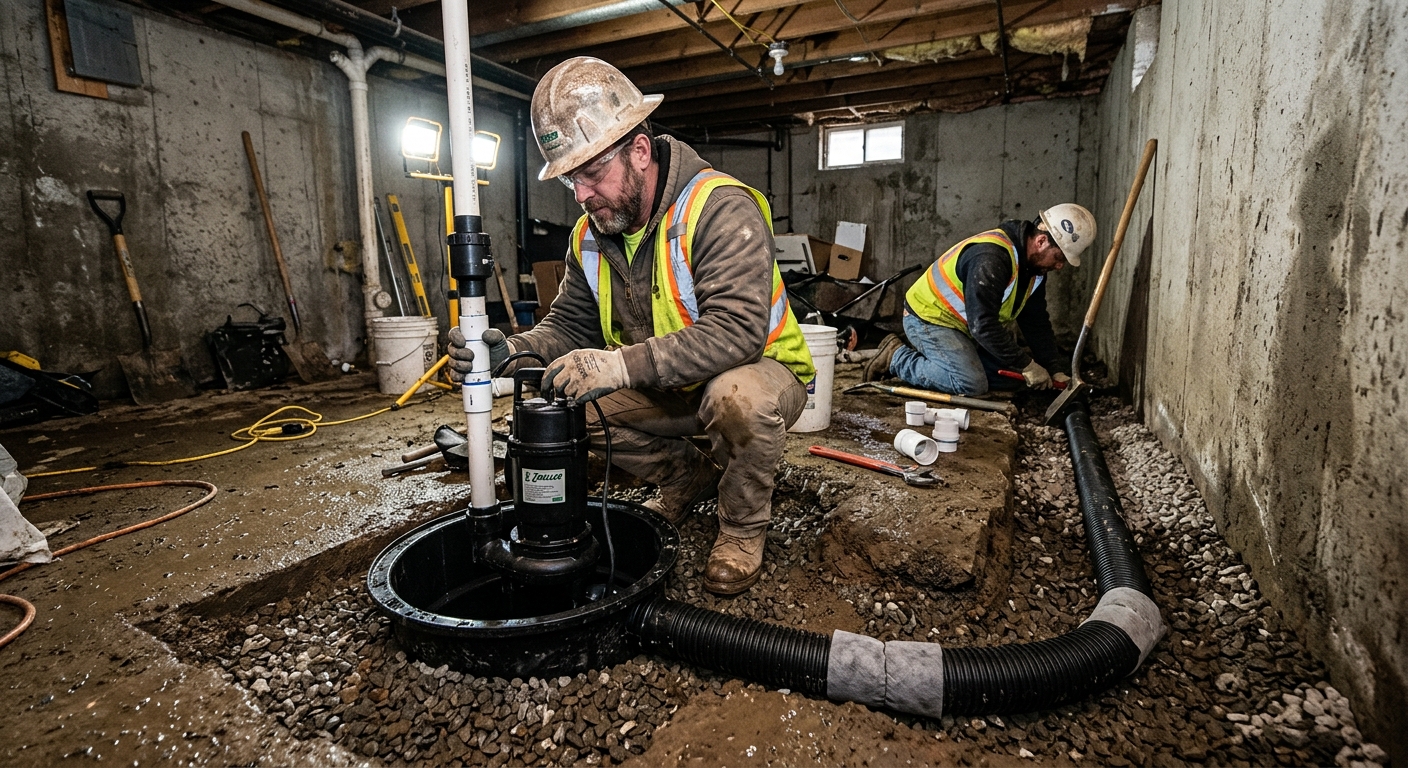
Basement waterproofing options and costs in Shuniah
Basement waterproofing in Shuniah usually starts with a simple question: where is the water getting in—at the footing, through wall cracks, or around window openings? With 1,350 homeowner households in the area and 97.2% of dwellings being single-detached homes, most projects are focused on typical basement configurations, not shared wall systems. Another key driver is age: 52.6% of homes in the region were built before 1981, which means many foundations originally relied on older weeping-tile and surface drainage methods that are now past their service life.
In Northwest Ontario, variable glacial soils and higher local water tables (particularly near Lake Superior and the Rainy River system) can push water pressure against foundation walls. Add freeze–thaw cycles that widen hairline cracks, and the job can shift from “stop a leak” to “restore a drainage system that can handle seasonal hydrostatic pressure.” Labour availability and excavation realities also matter; tight rural lots, heavy clay pockets, and deeper basements around Shuniah’s more cottage-and-residential belts (including the outskirts toward the lake) commonly push exterior work toward the upper end of the price bands.
The table below compares the main approaches homeowners choose in Shuniah, along with what each method addresses and the typical disruption you’ll plan for before calling contractors.
| Method |
What It Addresses |
Disruption Level |
Durability |
Price Range |
| Exterior excavation + new membrane + drainage tile |
Primary source of water entry; replaces failed weeping tile; relieves hydrostatic pressure |
High (excavation, landscaping restoration) |
Long-term (commonly 20+ years with proper backfill and drainage) |
$9,000–$18,000 |
| Interior perimeter drain channel + sump pit |
Controls seepage after water enters; captures water at the footing line |
Moderate (floor and wall work along perimeter) |
Strong (commonly 15+ years, depending on maintenance) |
$6,000–$14,000 |
| Foundation crack injection (epoxy or polyurethane) |
Seals cracks; injection type depends on whether a crack is active (actively leaking) or dormant |
Low to moderate (patching and surface prep) |
Good when the correct resin is used (often 10–20+ years) |
$600–$2,200 |
| Sump pump installation (primary + battery backup) |
Discharges collected groundwater; backup reduces risk during power outages |
Low to moderate (minor concrete cutting; electrical work) |
High when backup is included (reliable during outages) |
$1,800–$3,500 |
| Window well drain installation |
Manages water around egress/ window wells to prevent direct ingress |
Moderate (excavation at window wells) |
Good (typically 10–20 years depending on grading and maintenance) |
$1,200–$3,000 |
| Lot re-grading / downspout extension |
Redirects surface water away from foundation; reduces runoff load |
Low to moderate (yard work, some demolition) |
Good if maintained (often 5–10+ years) |
$600–$2,200 |
Prices are estimates only and vary by project scope, site access and material selection.
What affects the price of waterproofing in Shuniah
Homeowners in Northwest Ontario often see quotes for the “same” basement issue that vary by 30–50%—and it’s not just because contractors price differently. It’s usually because the site conditions, foundation details, and the proposed drainage strategy change the amount of excavation, concrete work, and material selection required.
The three biggest cost drivers that separate local pricing from the national average are soil type, water table conditions, and freeze–thaw cycles. In Northwest Ontario, clay-heavy pockets can expand when saturated and exert lateral pressure on foundation walls; when they dry, clay shrinks and can help create pathways for water through cracks. Where the local water table is high or seasonally elevated, hydrostatic pressure increases sump run times and raises the requirement for continuous perimeter drainage. Freeze–thaw around the Thunder Bay–Rainy River corridor can widen hairline cracks, turning minor seepage into active leaks that need the right resin type and more extensive patching.
Two practical Shuniah examples often explain the price spread. First, a home with failed exterior weeping tile typically needs exterior waterproofing (often $9,000–$18,000) because simply adding interior drains can leave the wall under pressure. Second, if water is limited to one corner and a crack is clearly active, crack injection (commonly $600–$2,200) plus targeted drainage fixes can cost far less than a full excavation—assuming inspection confirms there isn’t broader seepage behind the scenes. With 52.6% of regional homes built before 1981, older foundations and older exterior drainage are common, which increases the frequency of remedial work needed around weeping tile and footing interfaces.
| Price Factor |
Why It Matters |
Cost Impact |
| Interior vs. exterior approach — interior is less disruptive but addresses symptoms |
Exterior targets the source by replacing drainage and membrane; interior relies on capturing water after entry |
Exterior typically costs more; interior is usually lower disruption and lower upfront cost |
| Foundation type — poured concrete vs. block vs. stone vs. ICF |
Crack sealing and drainage needs differ by material and how water migrates |
Block and older materials often require more remedial detail work |
| Soil type — clay expands more than sand, adding pressure |
Clay saturation increases lateral wall stress and can force water through joints |
Higher labour and drainage scope when clay is persistent and saturated |
| Crack type and length — hairline vs. structural horizontal cracks |
Active, longer, or structural cracks require different injection and sometimes engineering review |
Structural or active cracks raise material and labour; may add investigation steps |
| Sump pump backup system — battery or water-powered backup needed |
Backup prevents basement flooding during spring outages and severe weather events |
Often adds cost but reduces risk significantly; may be recommended for high water table sites |
| Access — landscaping, decks, or driveways must be removed for exterior |
Excavation depth and surface restoration depend on what’s above the foundation |
Decks, fences, and driveways can add restoration time and disposal costs |
| Weeping tile age — original tile (60+ years) may be completely failed |
Old tile can collapse, clog, or no longer route water effectively |
When tile is failed, exterior drainage replacement becomes the realistic fix |
| Mould or efflorescence remediation required before sealing |
Sealers and membranes don’t bond well over contaminated, salt-laden, or wet surfaces |
Additional cleaning, drying time, and prep materials increase project duration and cost |
Permits & regulations in Ontario
In Ontario, some waterproofing-related work typically requires permits, especially when it involves foundation excavation, structural repairs, or changes to how water is managed on your property. In most cases, excavation near a foundation for exterior drainage and membrane installation needs a permit, as does structural crack repair when it involves conditions that could affect load paths. When a sump pump is installed and connected to a municipal sewer system (storm or sanitary), municipal approval is usually required before tie-in. If you’re unsure whether your discharge route needs approval, ask your contractor to confirm the proposed discharge method during the quoting stage.
For structural concerns—such as major horizontal cracks in block walls, significant step cracking, or signs of movement—an assessment by a structural engineer is often required to determine whether underpinning or other structural work is needed. A reputable waterproofing contractor should be able to coordinate this and can show you engineering support for structural repairs when the scope calls for it. Confirm they carry liability insurance and are properly registered for work they perform, including WSIB/WCB coverage where applicable.
To verify a contractor in Shuniah step-by-step: (1) request their Ontario business registration and any applicable trade licensing details; (2) ask for a certificate of insurance showing current liability coverage (and request the certificate number and expiry); (3) ask for WSIB clearance and/or WCB account details (and confirm the status). If structural engineering is part of the scope, request proof of engineering coordination (not just a verbal “we can handle it”).
Interior vs exterior waterproofing — what does Shuniah need?
In Shuniah, the fundamental choice is whether you’re solving the water’s entry point (exterior waterproofing) or managing water after it enters (interior waterproofing). Exterior waterproofing involves full excavation, new waterproofing membrane, new drainage tile, and engineered backfill. Done correctly, it’s the most direct way to relieve hydrostatic pressure at the footing and wall. The trade-off is higher disruption: landscaping and grading have to be disturbed and then restored.
Interior waterproofing focuses on capturing water inside the basement—usually with a perimeter drain channel, a sump pit, and an upgraded sump pump system. This is often less invasive and can be cost-effective when access for exterior excavation is difficult, or when water is primarily entering through cracks/joints rather than through the footing interface. However, interior systems generally don’t stop hydrostatic pressure against the wall itself; they route and discharge water that arrives.
Given Northwest Ontario’s freeze–thaw and seasonal water pressure patterns, many poured concrete basements respond well to targeted crack injection paired with interior drainage where needed, because the concrete surface can accept proper sealing and injection preparation. Block foundations often need interior drainage as a practical complement, especially if jointing has deteriorated or there are multiple seepage paths. Battery backup matters in this region because spring flooding and localized outages can happen when heavy rain and thaw cycles coincide—backup helps prevent a “power-off” event from turning into a costly clean-up.
A clear dollar example: if your inspector confirms widespread failed exterior drainage near the foundation, exterior work in the local range of $9,000–$18,000 may be justified because it addresses the pressure source. But if testing indicates a limited active crack and water ingress is localized, crack injection plus a perimeter drain strategy could stay closer to $600–$2,200 for the crack work, with the remaining costs focused on drainage capture rather than full excavation.
| Method |
Best For |
Addresses Source? |
Disruption |
Lifespan |
Price Band |
| Full exterior excavation + membrane |
High water pressure sites, failed weeping tile, recurring seepage along multiple walls |
Yes (primary source) |
High |
20+ years when drainage and backfill are done correctly |
$9,000–$18,000 |
| Interior French drain + sump system |
Limited exterior access, active seepage captured at the perimeter/footing line |
No (manages after entry) |
Moderate |
15+ years with routine upkeep |
$6,000–$14,000 |
| Crack injection — epoxy (structural) |
Dormant cracks in poured concrete or stable masonry where there is no active flow |
Yes (seals path through the crack) |
Low to moderate |
10–20+ years when properly prepped |
$600–$2,200 |
| Crack injection — polyurethane (active leak) |
Active leaks, weeping cracks, and joints showing water movement |
Yes (seals active path) |
Low to moderate |
10–20 years (often requires correct diagnosis of activity) |
$600–$2,200 |
| Interior drain channel only (no sump) |
Very minor seepage that drains by gravity and doesn’t require pumping |
No (management approach) |
Moderate (floor work) |
Variable; depends on consistent drainage and grading |
$4,500–$9,000 |
| Re-grading + downspout extensions |
Surface water problems driving runoff into the foundation |
Partial (reduces load, doesn’t stop seepage through cracks) |
Low to moderate |
5–10+ years with maintenance |
$600–$2,200 |
How to choose a waterproofing contractor in Shuniah
Choosing the right waterproofing contractor in Shuniah is about confirming three things: competence (the right method), compliance (insurance and coverage), and transparency (an itemised scope you can compare). Start with licensing and coverage verification. In Ontario, ask for the contractor’s business details and check their legitimacy through the relevant provincial business information channels. Then request a certificate of liability insurance and confirm the coverage is current (look for expiry dates and ensure your address is covered as an insured project/work site). For labour coverage, ask for evidence of WSIB/WCB status—either a clearance letter or account documentation showing they’re in good standing. Don’t accept “we’re covered” without seeing paperwork.
Next, get 2–3 itemised written quotes. You want line items that break down labour and materials (excavation depth, drainage tile and membrane type, sump pump model and backup option, concrete cutting/patching, disposal, and restoration). Carefully read exclusions: for example, mould removal/drying, permit pulling, engineering requirements, and landscaping restoration can be separate scope items. A solid warranty should be written clearly: workmanship warranty length, product/manufacturer warranty coverage, and whether the warranty transfers if you sell your home.
Payment matters too. Never pay more than about 10–15% upfront. Hold back a portion until the job is complete and verified. Finally, require a timeline with a start date and estimated completion in writing, including key steps like drying time after prep and curing for crack injection.
- Ask what method they recommend for your specific water path (source vs after-entry), not “one system for all basements.”
- Request moisture testing/inspection details (where water is entering) before quoting.
- Ensure the quote lists drainage components (tile, filter fabric, sump basin size) and the sump pump model.
- Confirm whether battery backup is included (or excluded) and what triggers it.
- Verify exterior scope includes membrane type, overlaps/penetration details, and backfill plan.
- Check if permit pulling is included or billed separately.
- Confirm disposal and tipping fees are included for concrete/excavation debris.
- Ask who handles restoration (grading, topsoil, sod/seed, driveway patching) and to what standard.
- Make sure they address efflorescence/mould remediation before applying sealants.
- Get the warranty in writing, including workmanship term and product term.
- Confirm whether warranties are transferable to future owners.
- Require a schedule in writing and a daily/weekly contact person for jobsite questions.
Red flags in Shuniah to watch for: (1) a contractor who won’t inspect the foundation and only offers one package; (2) quoting exterior waterproofing without discussing weeping tile replacement, backfill, and drainage routing; (3) refusing to provide insurance and WSIB/WCB documentation; (4) promising “100% waterproof” without clarifying limitations (especially after freeze–thaw); and (5) starting work before confirming permitting or proposed discharge method, if a sewer tie-in is proposed.
Frequently asked questions — waterproofing in Shuniah
What is the difference between waterproofing and damp-proofing?
In Ontario, “damp-proofing” usually means creating a surface that resists minor moisture—often suited to reducing seepage, not stopping sustained hydrostatic pressure. “Basement waterproofing” is broader: it addresses the water-entry pathway and the drainage strategy, such as replacing failed weeping tile, installing a drainage membrane, or using an interior perimeter drain and sump pump. In Shuniah and Northwest Ontario, freeze–thaw cycles and seasonal water pressure can turn minor dampness into active seepage through joints and cracks, especially in older homes (52.6% built before 1981). If you’re seeing recurring wet corners or efflorescence, you typically need waterproofing-level controls rather than a simple coating.
Will basement waterproofing affect my property value in Shuniah?
It usually can, because buyers in Shuniah (especially in older housing stock) often worry about recurring dampness, odours, mould, and foundation leakage history. A properly scoped waterproofing project with documentation—inspection notes, photos, product information, and warranties—helps demonstrate due diligence. While value varies by market timing, a basement that’s been stabilized with an interior drain system or exterior drainage remediation is easier to insure and easier to sell than one with ongoing leaks. For example, if your solution is a sump system plus backup in the local range of $1,800–$3,500, or a broader interior perimeter drain approach in the $6,000–$14,000 band, that provides tangible improvements and evidence of protection. The key is matching the method to the real water path.
What drainage issues are most common in Shuniah homes?
Common issues in Shuniah typically include clogged or failed weeping tile, water migrating through cold joints or foundation-wall cracks, and surface runoff that funnels toward the basement during spring thaw and heavy rains. Clay-heavy pockets can exacerbate this by expanding when saturated, increasing lateral pressure and pushing water through joints. Freeze–thaw can also widen hairline cracks over time, which is why seepage often changes from occasional to recurring. In many pre-1981 homes, original drainage and older exterior drainage details can be undersized or deteriorated. You may also see efflorescence on wall surfaces—an indicator that water is moving through concrete or masonry. Contractors usually investigate grading and discharge routing before deciding between exterior excavation or interior drainage.
How do I choose a waterproofing contractor in Shuniah?
Choose based on proof, not promises. Start by verifying insurance and coverage: request a current certificate of liability insurance and confirmation of WSIB/WCB status (often via a clearance letter or account documentation). Next, ask for 2–3 itemised written quotes with labour and materials broken out—especially drainage components, membrane type (for exterior), crack injection resin type (epoxy vs polyurethane), disposal, and restoration scope. Confirm whether permits are included where needed and whether they plan for engineering support if structural cracks are present. In Northwest Ontario conditions, a good contractor will explain how they confirm whether a crack is active and how they’ll manage seasonal water pressure. Finally, keep payments controlled—don’t exceed about 10–15% upfront and hold back until completion and documentation are provided.
What is a battery backup sump pump and do I need one in Shuniah?
A battery backup sump pump is a secondary system that automatically takes over if the power goes out, helping prevent basement flooding during outages. In Shuniah, you often benefit from backup where seasonal water levels and spring runoff are high enough that the sump runs frequently. While every property is different, backup is commonly recommended for homes with a high water table history, recurring seepage, or critical basement finishing that can’t tolerate downtime. If you’re choosing between options, budget accordingly: sump systems with battery backup typically fall into the $1,800–$3,500 local band. Your contractor should assess whether your sump run times during wet periods are likely to outlast normal outages and whether discharge power is required for your drainage strategy.
How much does basement waterproofing cost in Shuniah?
Basement waterproofing cost in Shuniah depends on whether the problem is localized (a crack or window well) or system-wide (failed exterior drainage and high hydrostatic pressure). Exterior waterproofing with excavation typically runs about $9,000–$18,000, especially when clay soils and access constraints increase labour and restoration work. Interior waterproofing—often a perimeter drain plus sump pit—commonly lands in the $6,000–$14,000 range. If you’re dealing with a specific crack, injection repairs are usually much less, often $600–$2,200 depending on crack length and whether the leak is active. Many projects include drainage improvements like downspout extensions and re-grading, which can be a lower-cost add-on when surface runoff is part of the cause.