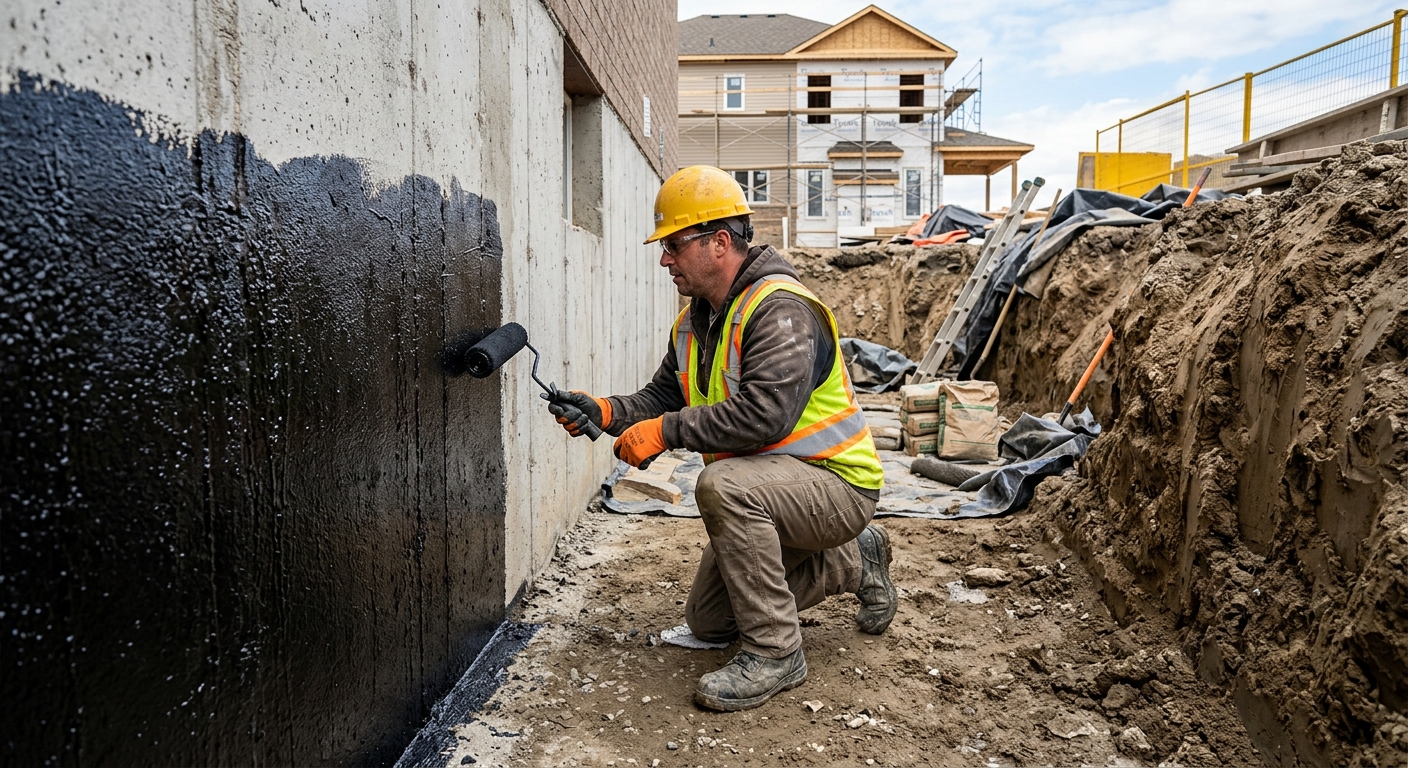
Basement waterproofing options and costs in Port Hope
Port Hope homeowners typically face waterproofing problems that start outside the basement—then show up inside as damp concrete, musty odours, or recurring seepage. This is especially common in housing stock built before 1981, when many foundations relied on older tar-and-paper systems and original weeping tile that has had decades to fail. With 63.7% of homes in the community built before 1981 (Statistics Canada, 2021 Census), it’s not unusual to see compromised footing drains, partially collapsed clay lines, or clogged perforated pipe that can’t keep up with spring melt.
In the Muskoka–Kawarthas region, costs are shaped by clay-loam soils that hold moisture and drain slowly, plus Ontario’s freeze–thaw cycles that can widen minor concrete or masonry cracks into active leakage paths. When the water table is high (common in low-lying pockets near the lake and creek corridors), hydrostatic pressure increases, so waterproofing often requires both water control and a durable seal. Contractor availability and pricing also reflect how access works in Port Hope neighbourhoods: older lots often have mature landscaping and tighter side yards, which can add excavation time and disposal costs.
Demand is frequently highest around the older built-up core and established residential streets where excavation is constrained—especially near the waterfront and areas with older foundation footprints. Once you’ve identified whether water is entering through the perimeter, through cracks, or at windows, you can compare the most common approaches and their typical price ranges in the table below.
| Method |
What It Addresses |
Disruption Level |
Durability |
Price Range |
| Exterior excavation + new membrane + drainage tile |
Hydrostatic pressure at foundation walls; replaces failed drainage around the footing |
High (excavation, landscape restoration) |
High (system-based: membrane + tile + backfill) |
$8,000–$25,000 |
| Interior perimeter drain channel + sump pit |
Water that enters through the footing/floor edge; directs it to sump |
Medium (minor floor cutting) |
Medium-to-High (depends on crack activity and pump reliability) |
$5,000–$18,000 |
| Foundation crack injection (epoxy or polyurethane) |
Cracks as leakage paths (polyurethane for active leaks; epoxy for properly prepared, non-moving cracks) |
Low (interior ports/patching) |
Medium-to-High (best when paired with drainage control) |
$600–$2,500 |
| Sump pump installation (primary + battery backup) |
Reduces interior water accumulation and protects finished basements |
Low-to-Medium |
Medium-to-High (reliant on power and maintenance) |
$1,800–$4,500 |
| Window well drain installation |
Surface water around egress windows entering the window well |
Low-to-Medium |
Medium (improves control at known leak points) |
$900–$2,800 |
| Lot re-grading / downspout extension |
Diverts roof and surface water away from foundation |
Low (grading; minor landscaping) |
Low-to-Medium (best as a preventative or add-on) |
$600–$3,200 |
Prices are estimates only and vary by project scope, site access and material selection.
What affects the price of waterproofing in Port Hope
In Port Hope and across Ontario, two contractors can quote the “same” waterproofing job and still come in 30–50% apart. The difference usually isn’t the brand—it’s the diagnosis, the scope exclusions, and whether the work solves water entry at the source or only manages it after it arrives. In the Muskoka–Kawarthas area, local soil and water-table behaviour can push projects toward the higher end of the price bands, especially when weeping tile is failing and freeze–thaw is activating cracks.
Three regional drivers separate Port Hope costs from the national average: (1) soil type, (2) water table, and (3) freeze–thaw. Clay-heavy and clay-loam soils common in central/eastern Ontario expand during freezing and can exert lateral pressure on foundation walls, worsening hairline cracks over time. When the water table is high—particularly during spring melt—sump pumps run longer and interior systems need larger capacity and redundancy. (By contrast, regions with faster-draining sandy soils often see less hydrostatic pressure and smaller sump requirements.) In older-housing neighbourhoods where original weeping tile is 60+ years old, clogged or partially collapsed lines can lead to recurring basement dampness even if the wall looks intact.
Here are a few real Port Hope examples that change pricing: homes with tight side access often force more careful excavation sequencing, raising labour and disposal costs within the $8,000–$25,000 exterior band. If a homeowner wants finished basement protection quickly, a $5,000–$18,000 interior drain + sump system may be chosen first, even though it doesn’t relieve wall pressure like exterior work. And if the basement shows active seepage through masonry joints plus efflorescence, the job can shift toward injection and pump upgrades—rather than simple patching—because freeze–thaw will keep reopening weak paths.
| Price Factor |
Why It Matters |
Cost Impact |
| Interior vs. exterior approach — interior is less disruptive but addresses symptoms |
Exterior reduces water at the source; interior captures it after entry |
Interior often costs less upfront, but repeated maintenance or future exterior excavation can raise total spend |
| Foundation type — poured concrete vs. block vs. stone vs. ICF |
Crack patterns and how water migrates vary by system |
Poured concrete may seal better with targeted crack injection; block often needs more comprehensive drainage |
| Soil type — clay expands more than sand, adding pressure |
Clay retains moisture and increases hydrostatic/lateral pressure during freeze–thaw |
Higher pump capacity, stronger seals, and more thorough drainage may be required |
| Crack type and length — hairline vs. structural horizontal cracks |
Active or structural cracks demand different prep, materials, and sometimes engineering |
Structural or long cracks increase labour, prep time, and possible engineering-related costs |
| Sump pump backup system — battery or water-powered backup needed |
Power interruptions can coincide with spring storms and melt |
Backup systems add cost but materially reduce risk of flooding in finished basements |
| Access — landscaping, decks, or driveways must be removed for exterior |
Work outside requires room to excavate safely and install proper drainage |
Removal/restoration can push exterior work toward the upper band |
| Weeping tile age — original tile (60+ years) may be completely failed |
Historic systems often clog or partially collapse |
More excavation and replacement becomes necessary, increasing exterior or interior scope |
| Mould or efflorescence remediation required before sealing |
Biological growth and salts can prevent durable bonding |
Additional remediation steps add time and materials before waterproofing proceeds |
Permits & regulations in Ontario
In Ontario, foundation excavation, structural crack repair, and changes to lot drainage typically require a building permit. If the work involves altering drainage connections—especially where sump discharge ties into a municipal storm or sanitary system—municipal approval is commonly required. For structural crack repair, particularly horizontal cracks in block walls or step cracks that suggest movement, an engineer’s assessment is often needed to confirm whether underpinning or other structural measures are required.
For homeowners in Port Hope, the practical approach is to ask your contractor to list exactly what triggers permits in your scope. Generally, the following often require permits: exterior foundation excavation and waterproofing where you disturb the foundation and perimeter drainage, repairs that may be considered structural (for example, targeted work on wall stability or major crack correction), and re-grading that changes how roof/surface water is managed. Often, lighter interior-only moisture control (such as installing an interior perimeter drain channel or adding a sump pit) may still be permit-dependent depending on how plumbing discharge is handled and whether floor cutting/building elements are modified—so confirm in writing.
To verify a contractor, check three things step-by-step: (1) confirm their Ontario licence/registration for the type of work they perform (use the contractor’s website and any provincial business/industry listings they reference), (2) request a current certificate of insurance (liability) and ensure the expiry date is current, and (3) verify WSIB/WCB coverage by asking for a clearance letter and matching it to the exact legal business name. For structural repairs, ensure they include engineering support and that the engineer is identified before work begins.
Interior vs exterior waterproofing — what does Port Hope need?
The fundamental difference is simple: exterior waterproofing excavates the perimeter, installs a membrane and new drainage tile around/at the footing, then backfills with the right drainage materials. That approach targets where the water enters and reduces hydrostatic pressure on foundation walls. It costs more and usually means more disruption. Interior waterproofing manages the consequence—water that has already entered—using an interior drain channel, sump pit, and sump pump (sometimes with battery backup). It typically involves less excavation and can be scheduled around occupied homes, but it doesn’t eliminate the pressure building up against the wall itself.
For Port Hope, the decision hinges on soil moisture and how long leaks have been present. Many homes built before 1981 (63.7% of local stock per Statistics Canada, 2021 Census) have older drainage lines and older foundations where water migration through joints and cracks is common. In those cases, interior systems often work best as a strong “control” strategy—especially when the basement is unfinished and excavation is disruptive—or when exterior access is limited. Poured concrete walls often respond well to crack injection as part of a drainage plan, while block foundations frequently need interior perimeter drainage as a practical complement because water can track along mortar lines and through the block’s pathways.
Sump pump backup matters in Ontario because spring flooding and storm events can coincide with short power interruptions; a battery backup adds protection so you’re not relying on one pump during peak melt. If you’re choosing between options, a typical scenario is spending toward exterior excavation (often within $8,000–$25,000) when the weeping tile is actively failing and you want one-and-done source control. By contrast, an interior drain + sump (often within $5,000–$18,000) may be the better value when you need faster results, have landscaping constraints, or are addressing recurring seepage while you plan future exterior work.
| Method |
Best For |
Addresses Source? |
Disruption |
Lifespan |
Price Band |
| Full exterior excavation + membrane |
Ongoing perimeter seepage where exterior drainage and membrane are failing |
Yes (source control) |
High |
Long (system-dependent) |
$8,000–$25,000 |
| Interior French drain + sump system |
Interior dampness/efflorescence with manageable exterior access |
No (manages water after entry) |
Medium |
Medium-to-Long with maintenance |
$5,000–$18,000 |
| Crack injection — epoxy (structural) |
Non-moving, properly prepared cracks in poured concrete or stable surfaces |
Partially (stops water through the crack path when conditions are stable) |
Low |
Medium-to-Long |
$600–$2,500 |
| Crack injection — polyurethane (active leak) |
Cracks actively weeping during wet seasons or snowmelt |
Partially (prioritizes stopping active leakage) |
Low |
Medium-to-Long with drainage control |
$800–$2,800 |
| Interior drain channel only (no sump) |
Light seepage where gravity drainage and low water accumulation can work |
No |
Medium |
Limited if water table rises |
$3,500–$8,500 |
| Re-grading + downspout extensions |
Preventative work or surface-water-driven dampness |
Sometimes (reduces water load near the foundation) |
Low |
Short-to-Medium |
$600–$3,200 |
How to choose a waterproofing contractor in Port Hope
Choosing the right waterproofing contractor in Port Hope is mostly about proving three things: competence in diagnosis, compliance (insurance/coverage), and a scope that actually matches your leak pathways. Start with Ontario licence/registration: ask for their business details and confirm the right credentials for the work being offered. Next, request a certificate of insurance (liability) and verify the coverage is current and listed in the exact contractor’s legal name. Finally, verify WSIB/WCB coverage by asking for a clearance letter—don’t accept “we’re covered” without documentation. If they can’t provide this in the first call or two, move on.
Then get 2–3 itemised written quotes. You want a breakdown of labour and materials, including membrane/drainage components, pump model, backup type, and disposal/restoration. A clear scope should state what’s included and what’s excluded: permit pull included or not, excavated soil disposal included or not, whether landscaping restoration is “like-for-like” or limited to specific areas, and how they will deal with existing weeping tile (abandon, reconnect, replace). Good warranties specify workmanship duration, product/manufacturer warranty terms, and whether coverage transfers if you sell the home.
For payment schedule, never pay more than 10–15% upfront. Hold back an amount until the job is complete and you’ve inspected the key deliverables (drainage tie-ins, pump operation test, sealing details). Also insist on a written start date and completion estimate that reflects weather risk and curing times.
- Request site-specific waterproofing recommendations based on observed crack/water entry, not generic “one system fits all.”
- Ask how they confirm cause (video camera for weeping tile, dye testing, moisture readings) before quoting.
- Ensure quotes list exact pump specs and whether battery backup is included.
- Confirm whether exterior disposal, backfill materials, and compaction testing are included.
- Ask who pulls permits (and whether it’s included in the price) when excavation or drainage changes trigger them.
- Verify warranty terms in writing for workmanship and products (including transferability).
- Confirm how they handle mould/efflorescence remediation before sealing surfaces.
- Check that crack injection includes crack preparation steps (routing/cleaning) and the crack type selection.
- Confirm accessibility constraints (driveways, decks, shrubs) are acknowledged with allowances.
- Ask for pump discharge routing and check-valves (where applicable) in writing.
- Review the payment schedule and keep a holdback until operational testing is complete.
- Get the schedule: start date, inspection milestones, curing/return dates, and cleanup expectations.
Red flags in Port Hope include: quotes that refuse to visit the site or don’t explain where water is entering; “lump-sum” pricing with no pump model or membrane/drain material specified; no clear warranty duration or product documentation; asking for large deposits (well beyond 10–15%) or refusing a holdback; and contractors who can’t show current liability insurance and WSIB/WCB clearance when asked.
Frequently asked questions — waterproofing in Port Hope
What is a weeping tile and does my Port Hope home have one?
A weeping tile (often called a footing drain or perimeter drain) is a buried perforated drainage pipe placed around the foundation footer area. Its job is to collect groundwater and direct it to a sump or outflow point, reducing water pressure against basement walls. Many Port Hope homes—especially the older housing stock—originally had some version of weeping tile installed when foundations were built. If your home is one of the dwellings built before 1981, that’s statistically the era when original systems are more likely to be present but also more likely to be failing (63.7% of homes built before 1981, Statistics Canada, 2021 Census). You can confirm by checking old documentation, looking for evidence of a sump pit/discharge, and having a contractor inspect with camera/location tools if access is available.
Can I waterproof my basement in winter in Port Hope?
Yes, you can waterproof in winter in Port Hope, but the method matters and schedules can be tighter. Interior work (like installing an interior perimeter drain channel, sump pit work, or crack injection where conditions allow) is often more feasible when exterior excavation would be frozen or unsafe. That said, exterior waterproofing excavation and drainage-tile replacement can be delayed because frozen soil makes trenching, drainage grading, and membrane installation much harder—weather can also slow curing and backfill placement. A good contractor will tell you what can be done now versus what must wait for spring thaw, and they should include realistic timelines. For example, interior waterproofing commonly falls within the $5,000–$18,000 band depending on scope, whereas exterior projects are more frequently scheduled when conditions support proper excavation and drainage installation within $8,000–$25,000.
What is the difference between waterproofing and damp-proofing?
In everyday terms, damp-proofing is aimed at reducing moisture transmission and minor seepage, usually through surface sealing and drainage “assist,” while waterproofing is designed to manage water under higher pressure conditions. In Port Hope’s climate (freeze–thaw in particular), moisture can migrate through cracks and joints and become active leakage paths during spring melt and heavy rains. Damp-proofing may help with early dampness but can fall short when hydrostatic pressure rises against foundation walls. Waterproofing typically combines a drainage strategy (interior or exterior) with membranes/seals and, when needed, sump pump control. If you’re seeing recurring puddling, efflorescence, or musty odours after wet weather, you should treat the situation as a waterproofing issue rather than a “light dampness” fix—especially in older homes where original weeping tile is often compromised.
Will basement waterproofing affect my property value in Port Hope?
Often, yes—because it protects what’s typically one of the most valuable living areas of the home. In Port Hope, where a large share of residences are older (63.7% built before 1981, Statistics Canada, 2021 Census), buyers are particularly cautious about recurring dampness, mould concerns, and foundation seepage. A properly scoped waterproofing job can improve marketability by reducing visible water issues and improving the usable condition of the basement. However, value depends on doing the right solution: a cheap “cosmetic” seal without drainage can lead to repeat problems, while a well-documented system (pump testing, drainage design, warranty paperwork) helps buyers feel confident. If you invest in exterior source control, projects can align with the $8,000–$25,000 range; interior systems commonly land in the $5,000–$18,000 range. The best value comes from matching the fix to the actual water entry pathway.
What drainage issues are most common in Port Hope homes?
The most common issues usually involve foundation perimeter drainage and the way surface water is handled. In Port Hope and across Muskoka–Kawarthas, clay-loam soils can hold moisture and drain slowly, which increases hydrostatic pressure during wet periods. Many older homes also have original weeping tile that may be clogged, silted, or partially collapsed, leading to damp basements or recurring seepage. Common symptoms include water pooling at the basement floor edge, damp concrete corners, efflorescence (white salts), and mouldy odours after spring melt. Window well problems are also frequent—surface water can enter through the well during heavy rains if there’s no proper drain or grading. Finally, downspouts and roof runoff that discharge too close to the foundation can overwhelm aging drainage. Addressing these causes often determines whether you can stay within preventative work budgets or need full interior/exterior waterproofing.
How do I choose a waterproofing contractor in Port Hope?
Choose a contractor by verifying compliance, insisting on itemised scope, and matching their solution to your specific leak pathway. In Ontario, ask for proof of liability insurance and confirm WSIB/WCB coverage via a clearance letter. Don’t rely on verbal assurances. Next, get 2–3 written quotes with a clear labour/material breakdown (pump model, membrane/drain products, disposal, and restoration). Ask what’s included about permits—especially for excavation and drainage changes that typically require approval—and whether they will provide supporting documentation for structural crack work when needed. Make sure the warranty covers workmanship and product performance, and ask if the warranty transfers if you sell. Finally, be cautious with deposits; a common rule is never more than 10–15% upfront. If someone offers unrealistic pricing across the $8,000–$25,000 exterior band or under-specifies pumps within the $1,800–$4,500 sump installation range, it’s worth slowing down and questioning the scope.