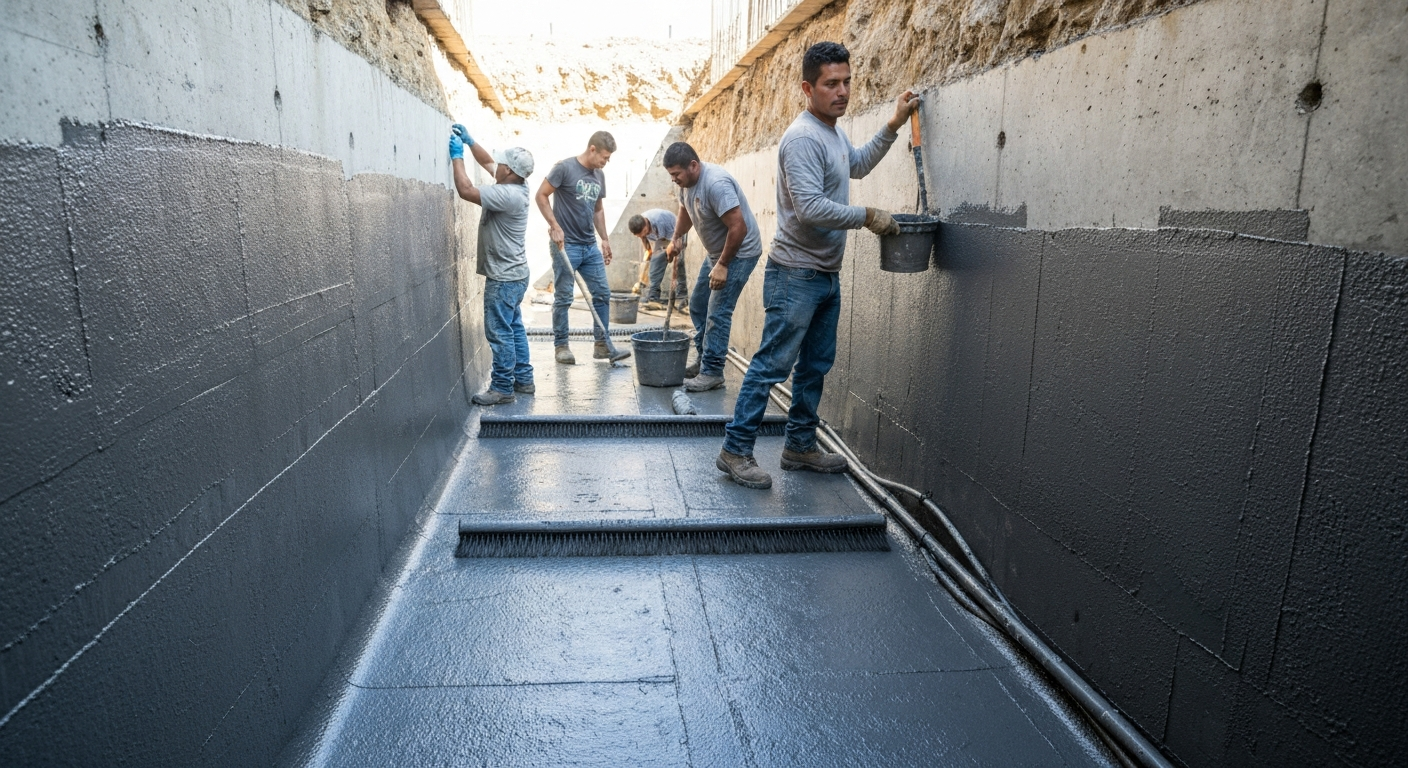
Basement waterproofing options and costs in Vaughan
Vaughan homeowners typically run into basement dampness because the region’s mixed glacial till and clay pockets don’t drain freely. In Vaughan specifically, many properties have older waterproofing components, and only 7.6% of homes were built before 1981—meaning most basements are from post-war to later eras when the original systems (weeping tile, membranes, and early drain configurations) are now reaching end-of-life. In practice, that shows up as clogged or collapsed weeping tile, weak cold joints, and cracks that widen after winter freeze–thaw.
Pricing in the Toronto area also reflects market realities: excavation is labour-intensive when lots are tight and decks, fences, and driveways must be temporarily removed. Contractors are especially in demand in Maple and Vaughan Metropolitan Centre pockets, where mature neighbourhood lots and active development create access constraints and more “worked around” excavation. Freeze–thaw matters too—what starts as a hairline crack can become an active leak after a few winters, requiring crack injection or combined drainage solutions.
Below is a practical comparison of common approaches, when Vaughan clients choose them, and what they typically cost before taxes. Use it as a baseline to understand why one quote may land near the lower end of the range while another comes in higher due to excavation depth, drainage replacement scope, and how much interior remediation must be done first.
| Method |
What It Addresses |
Disruption Level |
Durability |
Price Range |
| Exterior excavation + new membrane + drainage tile |
Lateral water pressure and water entry at the foundation perimeter (hydrostatic control) |
High (yard disruption, trenching, backfill) |
Long-term when properly detailed and drained |
$7,000–$25,000 |
| Interior perimeter drain channel + sump pit |
Water after it enters; reduces seepage, efflorescence, and floor flooding |
Moderate (floor cutting/patching) |
Very good if water source is controlled and pump is maintained |
$3,500–$15,000 |
| Foundation crack injection (epoxy or polyurethane) |
Isolated leaks through cracks and cold joints (epoxy for structural/stable cracks; polyurethane for active seepage) |
Low to moderate (minimal demolition) |
High for the right crack type and prep |
$600–$3,000 |
| Sump pump installation (primary + battery backup) |
Controls groundwater discharge during spring wet periods and outages |
Low to moderate (pit + electrical work) |
High with backup power and proper discharge routing |
$800–$3,500 |
| Window well drain installation |
Direct surface water entry and seepage at egress windows |
Low to moderate (partial exterior or interior adjustments) |
Good; improves localized water management |
$1,200–$5,000 |
| Lot re-grading / downspout extension |
Redirects roof runoff away from foundation to reduce saturated soils |
Low (minor landscape disruption) |
Good for maintenance-focused control |
$1,000–$4,500 |
Prices are estimates only and vary by project scope, site access and material selection.
What affects the price of waterproofing in Vaughan
In Vaughan and the broader Toronto region, two homeowners can receive quotes for “the same” basement leak that differ by 30% to 50% because waterproofing is diagnostic work first—then construction. Contractors price the source of water and the site conditions, not just the visible symptom. In Ontario, the big three drivers that separate local costs from the national average are soil type, water table and freeze–thaw. Clay-heavy conditions expand when saturated, increasing lateral pressure on foundation walls and worsening cracks over time. Higher local groundwater levels increase pump sizing and the need for reliable drainage discharge. And Ontario winters turn small defects into active failures: freeze–thaw can widen concrete/block defects and accelerate seepage through cold joints, tie holes, and hairline cracks.
Concrete examples that commonly change cost in Vaughan: (1) if the basement floor must be cut only along a narrow perimeter channel, interior-only solutions may stay closer to the $3,500–$15,000 band; but if floor levels require broader demolition for multiple discharge points, costs rise. (2) if excavation is needed along one side only because the other side has an addition, you might stay near the lower end of the $7,000–$25,000 exterior range; full perimeter access can push higher. (3) homes with older, partially failed weeping tile often need both drainage replacement and interior management, combining approaches rather than choosing one.
Housing age and drainage age also matter. Vaughan has a stable homeowner base (with 89,290 homeowner households, Statistics Canada, 2021 Census), and in many established pockets the original drainage components are decades old—so contractors often budget for more prep and verification testing before sealing.
| Price Factor |
Why It Matters |
Cost Impact |
| Interior vs. exterior approach — interior is less disruptive but addresses symptoms |
Interior manages water after entry; exterior targets the source by removing lateral hydrostatic pressure |
Interior often costs less upfront; exterior can cost more but reduces recurring seepage risk |
| Foundation type — poured concrete vs. block vs. stone vs. ICF |
Different wall materials crack and leak differently; detailing changes the method (membrane vs drainage vs injection) |
Block and older poured concrete often need more crack prep and drainage strategy |
| Soil type — clay expands more than sand, adding pressure |
Clay saturation increases wall pressure and seepage rates during spring wet cycles |
Clay-heavy sites typically increase the scope of perimeter drainage and sealing |
| Crack type and length — hairline vs. structural horizontal cracks |
Hairline cracks may be injectable; structural horizontal cracks may require engineered assessment |
Structural cracks add engineering time and potential stabilization costs |
| Sump pump backup system — battery or water-powered backup needed |
Ontario power interruptions during spring storms can leave pumps inoperative |
Backup systems typically add cost but reduce “no-pump” flood risk |
| Access — landscaping, decks, or driveways must be removed for exterior |
Excavation time and disposal increase when yards are hard to access |
Exterior work can jump significantly with demolition/disposal requirements |
| Weeping tile age — original tile (60+ years) may be completely failed |
Older weepers often are clogged, broken, or detached |
Replacement may expand the project from patching to full drainage rehab |
| Mould or efflorescence remediation required before sealing |
Sealers and membranes require a clean, stable substrate |
Additional remediation steps add time and material costs |
Permits & regulations in Ontario
In Ontario, foundation-related work can require permits depending on how far you’re changing the structure or lot drainage. Typically, foundation excavation and replacement of drainage systems around the foundation perimeter generally falls under permit-required scope, especially when trenching affects load-bearing areas or involves more than minor repairs. Structural crack repair—particularly horizontal cracks in block walls or major step cracking—often needs an assessment by a structural engineer to determine whether underpinning or structural stabilization is necessary. If underpinning or structural modifications are recommended, permits are commonly required.
Sump pump installations can require municipal approval when the discharge connection routes to storm or sanitary systems. Some simpler interior drainage work may not require the same level of external approval, but it’s important to confirm the exact tie-in method. As a homeowner in Vaughan, insist your contractor clearly states whether permits are pulled and who is responsible for submissions.
To verify your contractor in Ontario: (1) confirm their business registration and any applicable trade licensing information through provincial and business databases; (2) request a certificate of insurance showing liability coverage and ask for a clear effective period; (3) confirm WSIB/WCB coverage documentation; and (4) for structural repairs, require proof they have access to engineering support (engineer involvement letter or scoped report). Start by asking for these documents before you sign—reputable contractors treat it as standard.
Interior vs exterior waterproofing — what does Vaughan need?
For Vaughan basements, the fundamental choice is whether you address water at the source (exterior) or manage it after entry (interior). Exterior waterproofing involves full excavation, new membrane, new drainage tile, and backfill. It permanently reduces hydrostatic pressure against foundation walls, but it costs more and requires yard disruption—an important factor on tight lots common in established Vaughan neighbourhoods. Interior waterproofing (perimeter drain channel, sump pit, sump pump) does not stop water pressing on the wall; it captures seepage and routes it to a sump so your walls and floors stay drier.
Ontario’s freeze–thaw cycles and clay-heavy pockets mean interior solutions alone can work well as a “control system” if the drainage is engineered and the sump discharge is reliable. But if the foundation is failing due to persistent high lateral water pressure, exterior work is often the most durable fix. Poured concrete walls usually respond very well to properly prepped crack injection where the cracks are stable; however, when seepage is widespread, you still need drainage strategy. Block foundations frequently benefit from a combined approach: crack injection where needed plus interior perimeter drainage as a practical complement, especially when access for full excavation is limited.
Sump backup matters in Ontario. During spring wet periods and storms, power interruptions can occur, so battery backup (or a water-powered backup where appropriate) is often recommended to protect against overnight flooding.
Price justification example: if you’re choosing between interior perimeter drainage and exterior excavation, interior may sit in the $3,500–$15,000 band; exterior can be $7,000–$25,000. Exterior becomes worth it when you’re seeing repeated seepage along multiple wall sections, elevated groundwater, or recurring efflorescence despite interior work.
| Method |
Best For |
Addresses Source? |
Disruption |
Lifespan |
Price Band |
| Full exterior excavation + membrane |
Chronic seepage, high hydrostatic pressure, repeated interior failures |
Yes |
High |
Long-term when drainage detailing is correct |
$7,000–$25,000 |
| Interior French drain + sump system |
Localized to moderate seepage, failing weeping tile, manageable excavation access |
No (manages water after entry) |
Moderate |
Very good with correct pump sizing and discharge |
$3,500–$15,000 |
| Crack injection — epoxy (structural) |
Stable cracks where water is not actively streaming under high pressure |
Partly (stops crack leakage path) |
Low to moderate |
High for stable, properly prepped cracks |
$600–$2,500 |
| Crack injection — polyurethane (active leak) |
Active seepage or damp/cracking areas with ongoing moisture |
Partly (stops active leak path) |
Low to moderate |
High when substrate prep and crack conditions are correct |
$900–$3,000 |
| Interior drain channel only (no sump) |
Light seepage or situations where sump is not feasible and floor water must be contained |
No |
Moderate |
Variable; depends on discharge control |
$2,500–$8,000 |
| Re-grading + downspout extensions |
Roof runoff and surface water issues where water entry follows rainfall patterns |
Helps reduce source load (surface water) |
Low |
Good as maintenance control; not a fix for high groundwater pressure |
$1,000–$4,500 |
How to choose a waterproofing contractor in Vaughan
Start by verifying the contractor’s coverage and credentials before you compare pricing. In Ontario, request their WSIB/WCB clearance letter (or equivalent proof of account status), and ask for a current liability insurance certificate naming you as applicable. Then confirm their business details and any relevant trade registrations through provincial and corporate registries. A reputable Vaughan waterproofing contractor should hand you these documents quickly—if they hesitate, treat it as a red flag.
Get 2–3 itemised written quotes. The best quotes separate labour and materials (for example, how much for excavation, membrane, drainage tile, pump/piping, disposal, and interior concrete restoration). Ask whether the quote includes permit pulling, engineering submissions (if needed), and disposal/haul-away for excavated material. Read the scope carefully: what is explicitly excluded (for example, drywall removal, mould remediation, electrical work for pumps, or re-labelling and patching)?
Warranty is crucial: request the workmanship warranty length, the product/manufacturer warranty, and whether it’s transferable to a future buyer. Payment scheduling should protect you—never pay more than 10% to 15% upfront. Use a holdback until the job is complete and walkthrough items are resolved. Also get a written start date and completion estimate.
- Ask for a site access plan: how they’ll work around decks, fences, and driveways.
- Require a written diagnosis: where water enters and why (cracks, cold joints, weeper failure).
- Confirm the approach matches the foundation type (poured vs block) and crack condition.
- Request product names and system components, not just “membrane” or “drain tile.”
- Ask if they’ll inspect and verify existing weeping tile condition before deciding scope.
- Get pump specs in writing (basin size, discharge line, check valve, backup type).
- Require discharge routing details (and whether it needs municipal approval).
- Clarify concrete restoration scope (cut lines, patch type, curing time).
- Confirm disposal is included for exterior excavation.
- Ask who coordinates engineering if structural cracks require assessment.
- Request the warranty start date and warranty terms in plain language.
- Use an itemised payment schedule aligned to milestones and inspections.
Red flags in Vaughan waterproofing: vague scope (“we’ll seal it”), no insurance/WSIB proof, quotes that only address aesthetics (paint/patch) without drainage, pump solutions without backup where there’s a flood history, and a contractor who won’t put exclusions and disposal details in writing.
Frequently asked questions — waterproofing in Vaughan
How does Vaughan's soil affect my foundation?
Vaughan is known for mixed glacial till and clay-heavy pockets, which can hold water against basement walls and expand when saturated. During Ontario freeze–thaw cycles, that expanded soil increases lateral pressure, often turning hairline cracks into active seepage paths over time. You may notice damp corners, efflorescence, or water appearing after spring rains even if there’s no obvious exterior wall failure. For many Vaughan homes, especially where original drainage is decades old, the weeping tile may be partially collapsed or clogged, so clay saturation has nowhere to go. This is why contractors often recommend combining drainage strategy (interior perimeter drains and sometimes sump backup) with targeted crack work rather than only sealing visible spots. (Statistics Canada, 2021 Census)
Do I need a permit for foundation work in Ontario?
In Ontario, the need for a permit depends on the specific work. Foundation excavation and changes that affect foundation elements or lot drainage typically require a permit. Structural crack repair—especially horizontal or major step cracking in block walls—often triggers the need for an engineer’s assessment, and permits commonly follow if structural stabilization is recommended. For sump pumps, the permit question often comes down to how the discharge connects: tie-ins to storm or sanitary systems typically require municipal approval. For Vaughan homeowners, the best approach is to ask the contractor to list the exact permits (or exclusions) in the written quote and timeline. If the contractor says “no permit is ever required,” ask how they’re handling excavation and any sewer/storm discharge connection under Ontario rules.
How long does waterproofing last?
With proper detailing, waterproofing systems can last many years, but “how long” depends on whether you addressed the source. Exterior waterproofing (excavation, membrane, and new drainage tile) is built to manage hydrostatic pressure from the outside, so it tends to be longer-lasting—often aligning with the $7,000–$25,000 band when fully executed. Interior perimeter drains and sump systems (commonly in the $3,500–$15,000 band) can also perform for a long time when the pump is correctly sized, discharge is routed properly, and the system includes reliable power protection. Where results fall short, it’s usually because water entry is ongoing and only symptoms were managed, or because a failing weeping tile remained unchanged. If you’ve had efflorescence before, ask for a plan that includes pre-seal remediation so the system has a stable surface to perform.
Can I waterproof my basement from the inside only?
Yes, many Vaughan basements can be improved from the inside, especially when excavation access is limited or when water entry is intermittent and manageable. Interior methods typically include a perimeter drain channel, sump pit, and sump pump to capture seepage after it enters the basement. This can be cost-effective—often within the $3,500–$15,000 band—particularly when the issue is localized to certain wall sections or when original weeping tile is partially failed. However, interior-only work doesn’t remove hydrostatic pressure against the wall itself, so if clay soils and a higher water table are driving continuous lateral pressure, the basement may still experience recurring dampness without an exterior correction. If cracks are involved, targeted crack injection can help: epoxy for stable, structural cracks, or polyurethane for active leaks. Discuss your foundation type and crack pattern so your contractor doesn’t guess.
What causes foundation cracks in Vaughan?
Foundation cracks in Vaughan are typically caused by a mix of movement and moisture. Clay-rich soils can swell when saturated, then shrink as they dry—this creates seasonal lateral movement that puts stress on poured concrete and especially older block foundations. Freeze–thaw cycles further widen existing defects in concrete and mortar joints. In many established Vaughan homes, the original drainage and weeping tile may be clogged or collapsed, which increases groundwater and keeps soil moisture high around the foundation. That accelerates crack activity at cold joints, tie holes, and areas where water pathways have formed. You might also see cracks worsen after winter if minor seepage remains unaddressed. Pricing can vary because the crack type matters: hairline cracks are often manageable with injection, while structural horizontal cracks require assessment before you commit to sealing.
How do I compare waterproofing quotes?
To compare waterproofing quotes in Vaughan, insist on apples-to-apples scopes. Start by requesting itemised breakdowns: excavation/disposal, membrane and drainage tile components, interior drainage materials, pump and backup system, concrete restoration, and any engineering/permit allowances. Make sure each quote specifies whether permits are included and what discharge method is proposed for sump discharge. Check exclusions (mould remediation, drywall removal, electrical connections, landscaping restoration) and confirm whether they’ll verify existing weeping tile condition before pricing a “replacement” scenario. Look at durability details: exterior systems should describe drainage design; interior systems should specify pump type, check valves, and whether battery backup is included. If one quote lands in the $800–$3,500 range for pump work but omits backup, it may appear cheaper while increasing flood risk during spring outages.